## Introduction
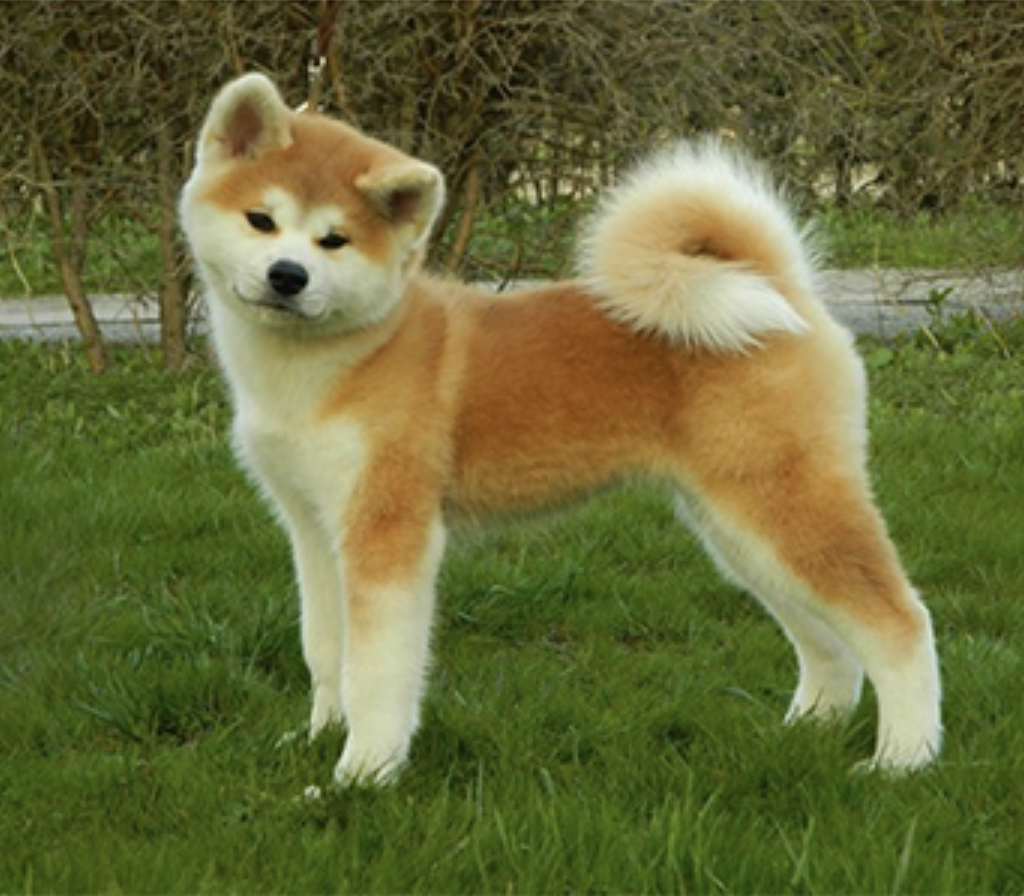
The Akita Inu is one of the oldest and most revered dog breeds in the world. Its homeland lies in the rugged mountainous regions of Akita Prefecture in northern Honshu, Japan. The breed is considered a national treasure of Japan and a living symbol of loyalty, nobility, and courage. The famous Hachiko — who waited nine years at Shibuya Station for his deceased owner — was an Akita Inu, and through him the world came to know the breed’s extraordinary devotion.
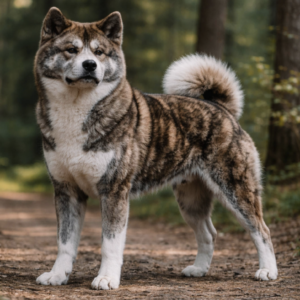
*A brindle Akita Inu in its native snowy environment.*
## History of the Breed
Archaeological evidence suggests that the ancestors of the Akita Inu lived in Japan more than 4,000 years ago. Originally called *matagi-inu* (“big-game hunting dog”), they were used to hunt bears, wild boars, and deer. By the 17th century, the Akita had become a dog of the Japanese aristocracy and the samurai class — each dog had its own personal attendant, and its care was accompanied by special ceremonies.
During World War II, the breed nearly went extinct: dogs were requisitioned for their fur to make military coats. After the war, dedicated breeders made enormous efforts to restore the pure bloodline. In 1931, the Akita Inu was officially designated a “Natural Monument” of Japan.
Today there are two main branches of the breed:
– **Japanese Akita Inu** — lighter in build, with a fox-like muzzle and a limited color palette (red, brindle, white).
– **American Akita** — larger and more massive, allowing a much wider variety of colors, including a black mask.
## Appearance
The Akita Inu is a large, well-proportioned dog with marked sexual dimorphism. Males stand 64–70 cm at the shoulder and weigh 40–50 kg; females are slightly smaller at 58–64 cm and 32–45 kg.
Key physical traits:
– powerful, balanced build;
– broad head with a short muzzle and characteristic “bear-like” cheeks;
– small, triangular erect ears tilted slightly forward;
– thick, plumed tail curled over the back;
– double coat: a coarse outer layer and a dense, soft undercoat.
## Character and Temperament
The Akita Inu has a uniquely noble character. It is a calm, self-confident animal with a strong streak of independence — almost cat-like. Defining traits include:
– **Unconditional loyalty** to one person or family.
– **Reserved nature** and wariness of strangers.
– **Natural guarding instinct** — an excellent watchdog without excessive aggression.
– **High intelligence**, combined with stubbornness and an inclination to make independent decisions.
– **Quietness** — Akitas rarely bark, and only when it matters.
This breed is not suited to first-time dog owners. The Akita needs a confident, consistent handler who can earn the dog’s respect rather than dominate by force.
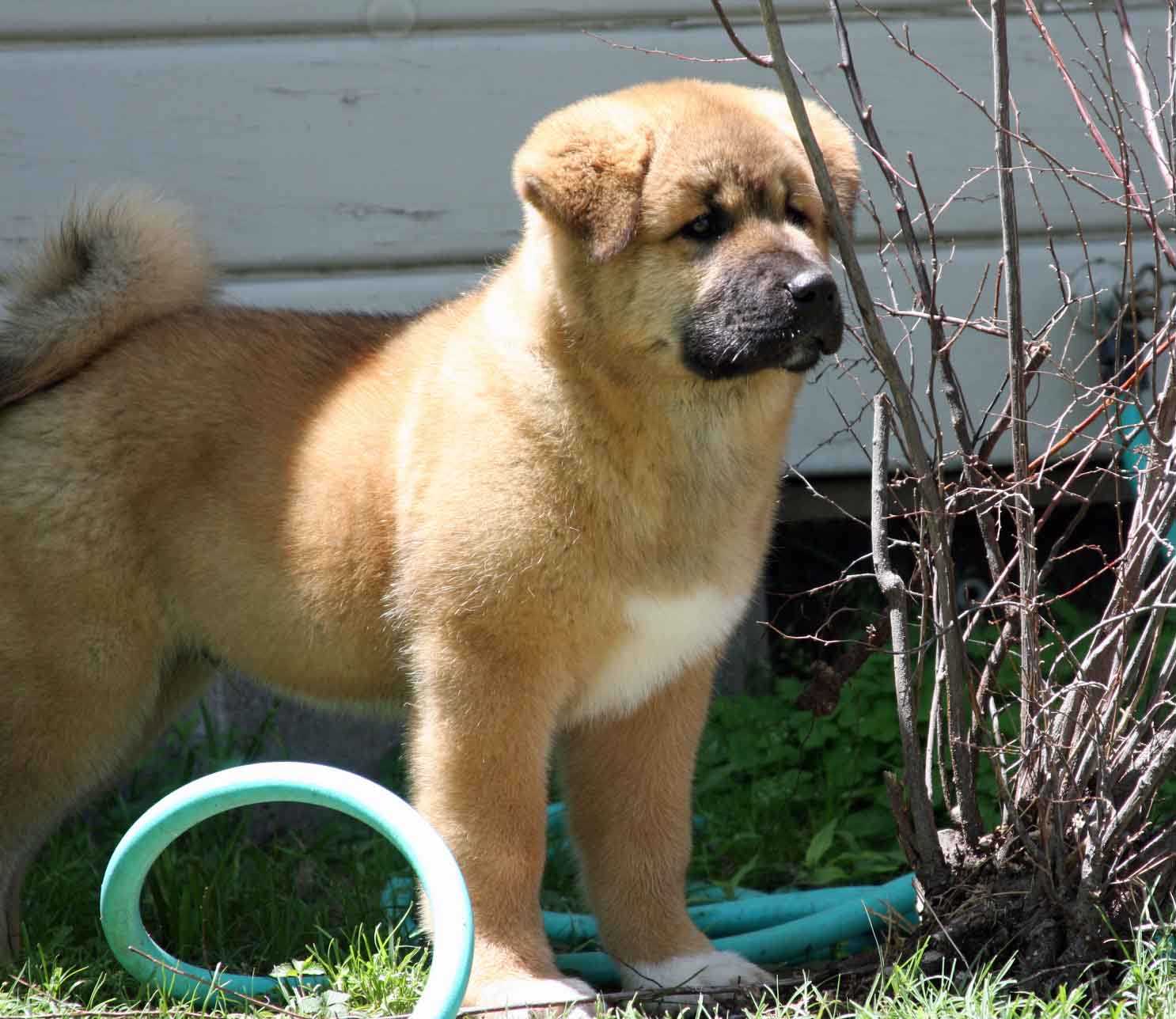
*A young Akita Inu puppy — early socialization is essential for this breed.*
## Training and Socialization
Early socialization is critically important. From 8–10 weeks of age, the puppy should be exposed to a wide range of people, animals, sounds, and environments. Without this, an adult Akita may become overly suspicious and aggressive toward other dogs, especially those of the same sex.
Training principles:
1. Use only positive reinforcement — harshness and physical punishment are unacceptable.
2. Establish clear, unchanging rules from day one.
3. Keep training sessions short and varied — repetitive routines quickly bore this intelligent dog.
4. Always respect the dog’s dignity — the Akita does not tolerate humiliation.
## Care and Living Conditions
The Akita Inu thrives in a house with a spacious yard, but can adapt to apartment life provided it gets long, active walks (a minimum of 1.5–2 hours per day).
**Coat:** brush 2–3 times a week, and daily during the heavy shedding seasons (twice a year). Bathing is only needed 2–3 times annually.
**Diet:** high-quality premium kibble or a balanced natural diet both work well. The breed is prone to food allergies, so the diet should be tailored individually.
**Health:** average lifespan is 10–14 years. Common health issues include:
– hip and elbow dysplasia;
– gastric torsion (bloat);
– autoimmune disorders (e.g., pemphigus);
– thyroid problems;
– progressive retinal atrophy.
Regular veterinary check-ups and responsible breeding significantly reduce these risks.
## Who Is the Akita Inu For?
This breed is best suited to an experienced owner ready to invest time and effort into training and bonding. An Akita will flourish in a family that respects it, provides both physical and mental stimulation, and treats it as a full member of the “pack.” It is not the right choice for someone seeking a constantly obedient, easygoing dog, or for anyone planning to keep the dog in a kennel without close family contact.
## Conclusion
The Akita Inu is more than just a dog — it is a companion with a thousand-year history, carrying the dignity of a samurai and the heart of the most loyal of friends. Anyone who shares their life with this remarkable breed will be forever captivated by its nobility, quiet strength, and boundless devotion.