
GreatXML: Bypassing BitLocker on Windows 11 via a Recovery-Partition unattend.xml

GreatXML: Bypassing BitLocker on Windows 11 via a Recovery-Partition unattend.xml

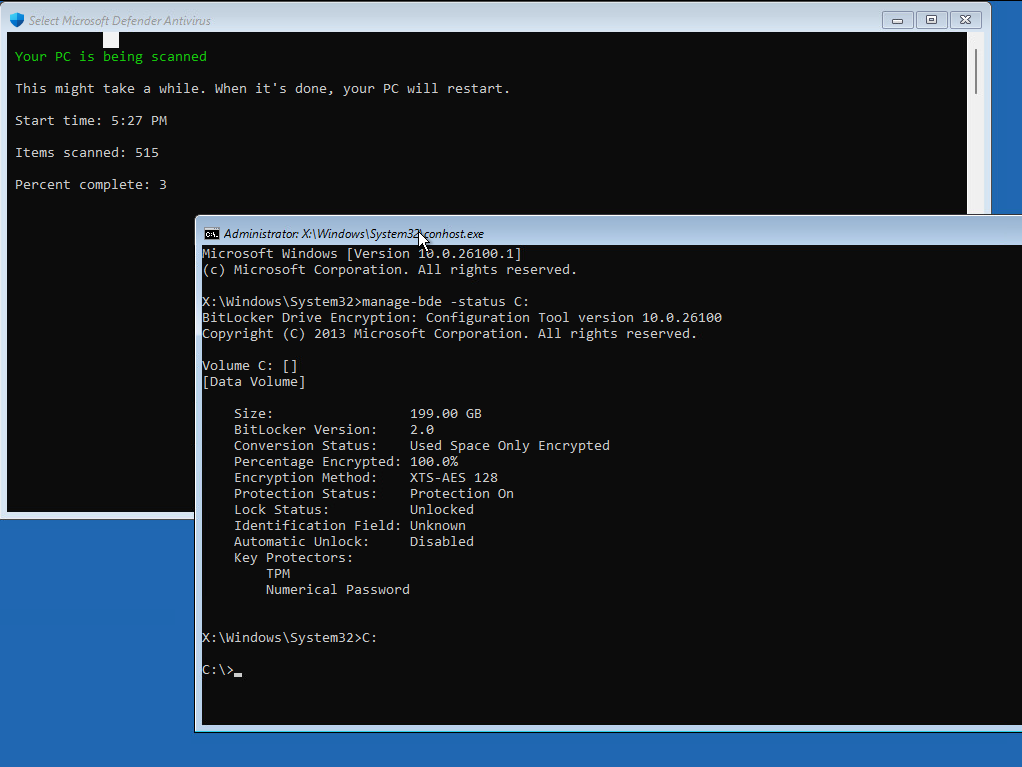
GreatXML is a one-file BitLocker bypass against Windows 11 24H2. Drop an attacker-controlled unattend.xml and ReAgent.xml into the root of the recovery partition; the next Defender Offline reboot honours them at the WinPE Setup pass and spawns an Administrator conhost.exe on top of the splash. The C: volume is already TPM-unsealed at that point, so the shell can cd C: and read everything. No crypto attack, no kernel exploit — just physical access plus two XML files. We reproduce the README, both XML files and both proof screenshots, explain why it works, and give a hardening checklist (TPM+PIN, reagentc /disable, recovery-partition integrity).

Microsoft Defender Now Monitors Remote RPC Activity: What It Catches and How to Hunt

Microsoft Defender Now Monitors Remote RPC Activity: What It Catches and How to Hunt

Microsoft Defender now audits inbound remote RPC calls at OpNum-level granularity through a Windows Filtering Platform integration, surfacing telemetry in Advanced Hunting and feeding detections like Impacket-style hands-on-keyboard, suspicious remote service creation, LSA secrets theft, RPC user / session discovery, and authentication coercion — with sample KQL queries for Remote Registry abuse, remote service creation, and NetrSessionEnum-based session discovery.

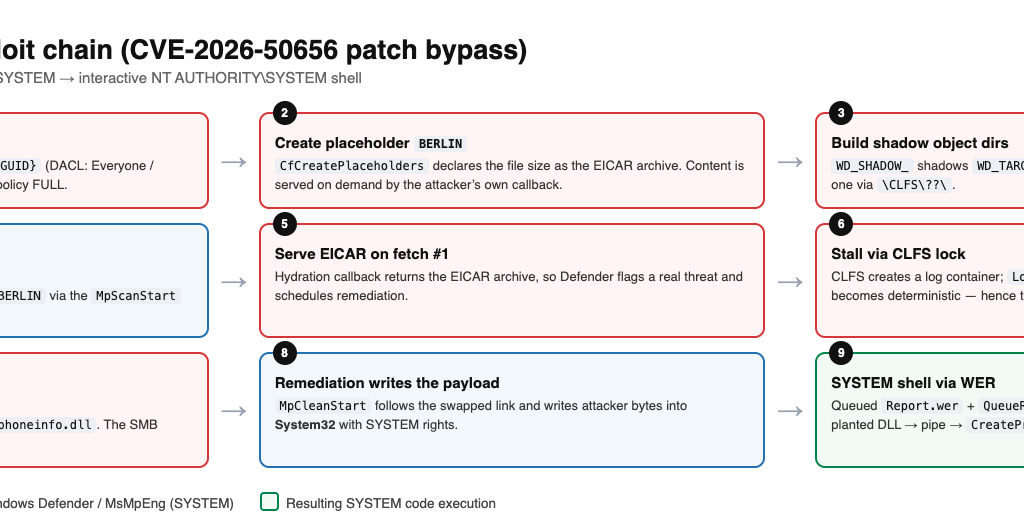
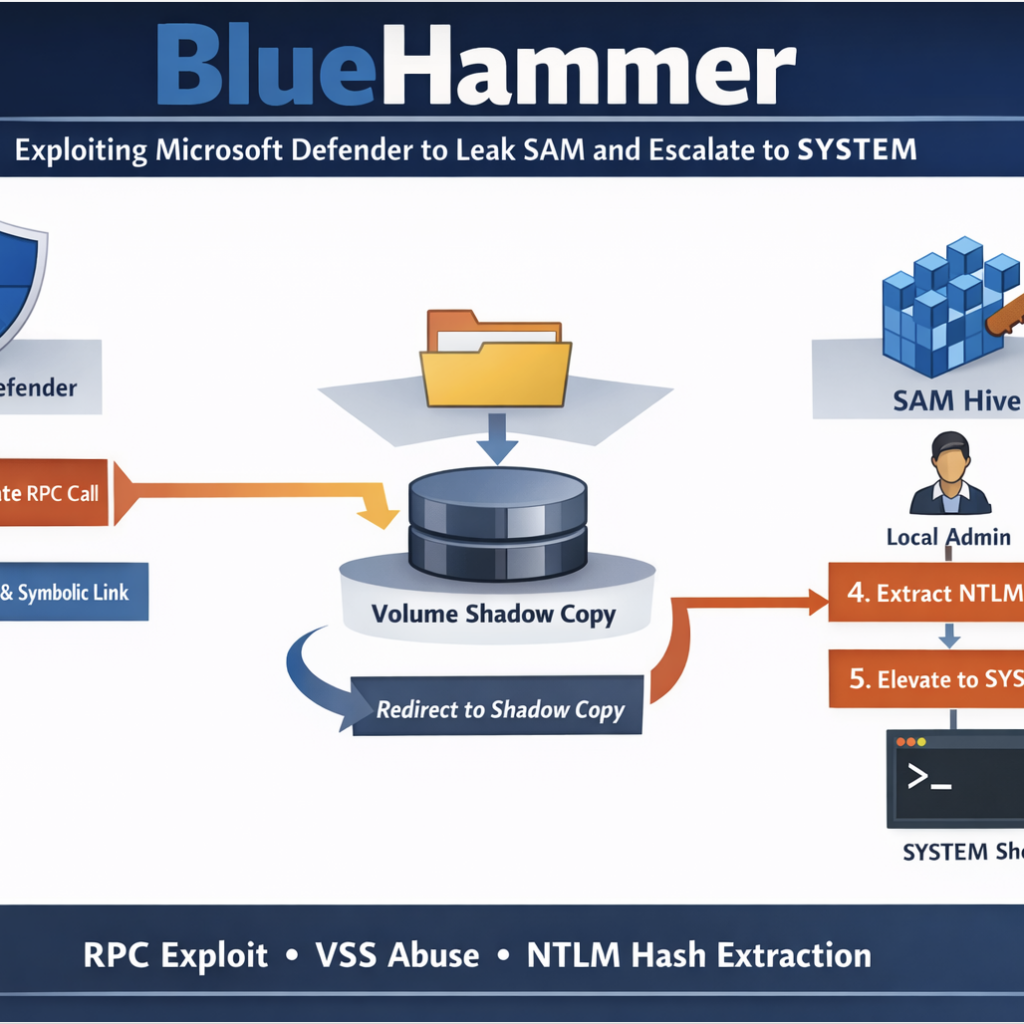
BlueHammer: Exploiting Microsoft Defender Update Workflow to Leak SAM and Escalate to SYSTEM

BlueHammer: Exploiting Microsoft Defender Update Workflow to Leak SAM and Escalate to SYSTEM

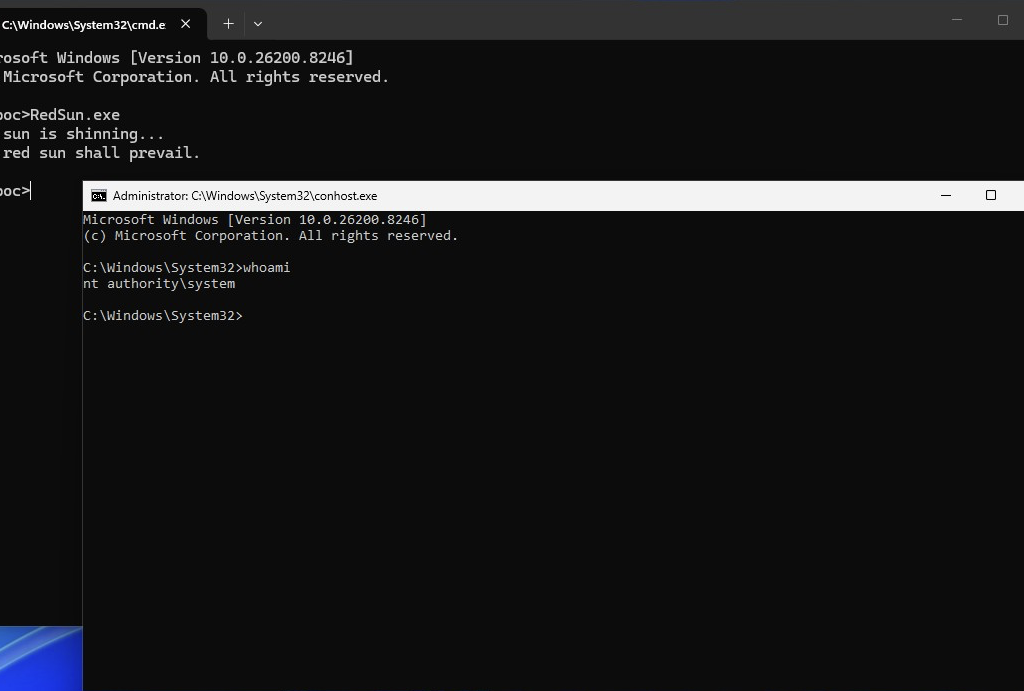
BlueHammer shows how Microsoft Defender’s update workflow can be abused to redirect privileged file access to a Volume Shadow Copy. By exploiting filesystem races and NT namespace tricks, the technique leaks the SAM hive, extracts NTLM hashes, and enables privilege escalation to SYSTEM.