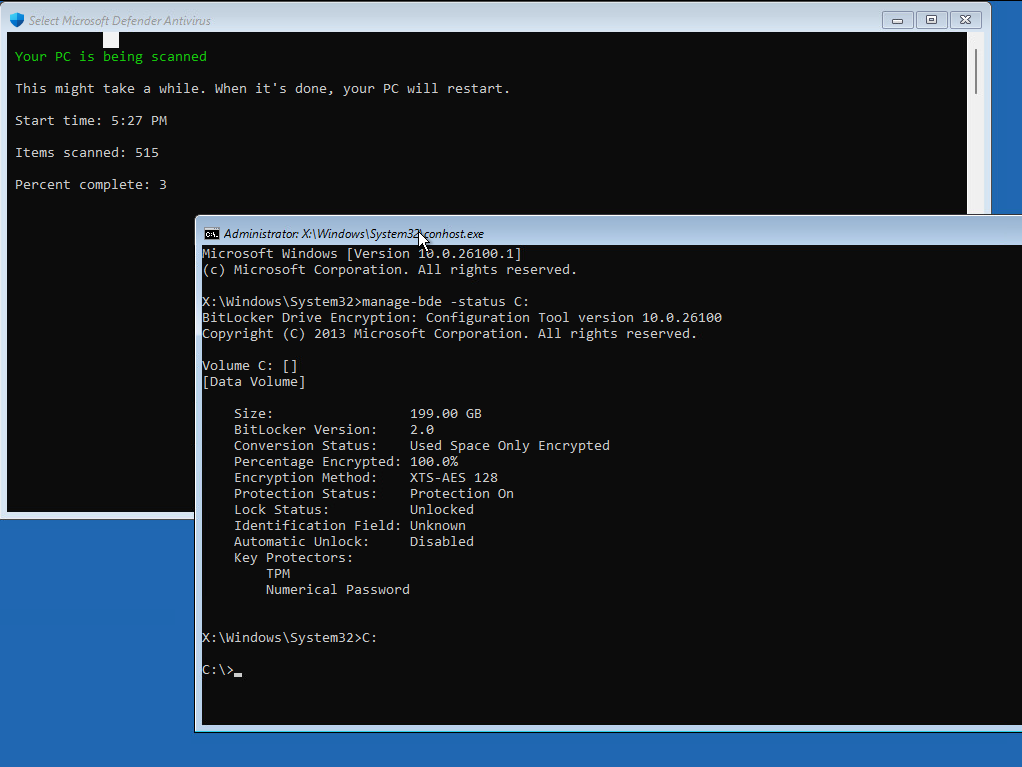
GreatXML is a one-file BitLocker bypass against Windows 11 24H2. Drop an attacker-controlled unattend.xml and ReAgent.xml into the root of the recovery partition; the next Defender Offline reboot honours them at the WinPE Setup pass and spawns an Administrator conhost.exe on top of the splash. The C: volume is already TPM-unsealed at that point, so the shell can cd C: and read everything. No crypto attack, no kernel exploit — just physical access plus two XML files. We reproduce the README, both XML files and both proof screenshots, explain why it works, and give a hardening checklist (TPM+PIN, reagentc /disable, recovery-partition integrity).
Breaking the Firmware Trust: Disabling Security in a Locked BIOS
The article shows how modifying UEFI firmware at the flash level can disable BIOS security features even when the interface is locked, enabling DMA attacks that bypass protections and lead to SYSTEM-level access.
Windows Local Privilege Escalation through the bitpixie Vulnerability
The article explains the Bitpixie vulnerability in Windows Boot Manager that allows attackers to bypass BitLocker encryption. By abusing a PXE soft reboot flaw, the BitLocker key remains in memory, enabling extraction of the VMK and potential privilege escalation.
Multiple vulnerabilities in CPSD CryptoPro Secure Disk for BitLocker
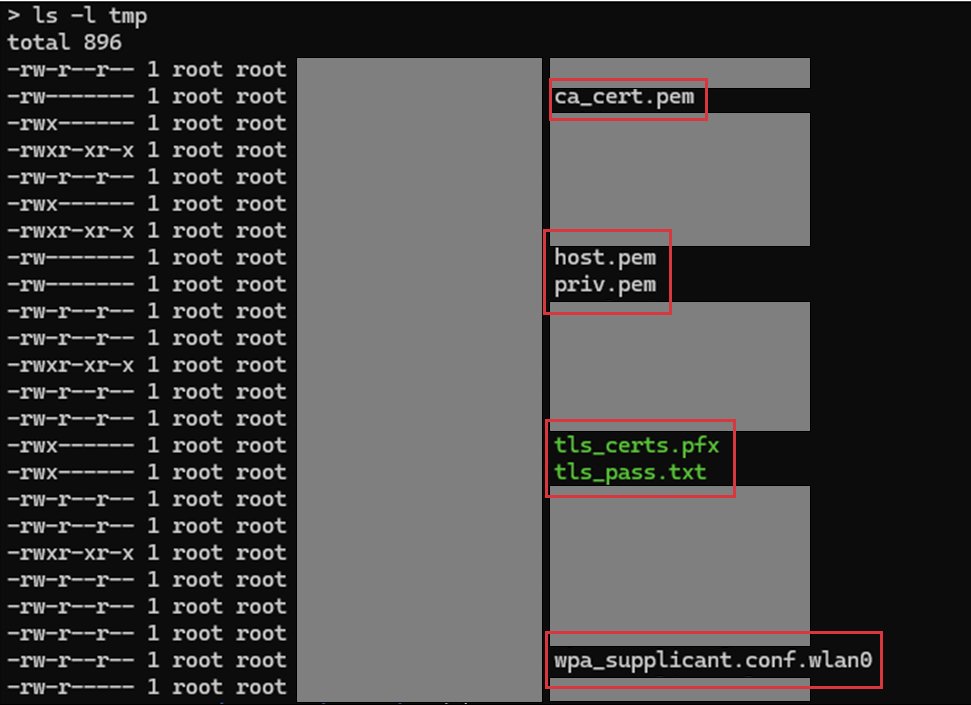
SEC Consult found two high-impact vulnerabilities in CryptoPro Secure Disk for BitLocker (<7.6.6/7.7.1). An attacker with physical access can bypass integrity checks to gain root access (CVE-2025-10010) and read sensitive network data stored in cleartext. Patches are available.
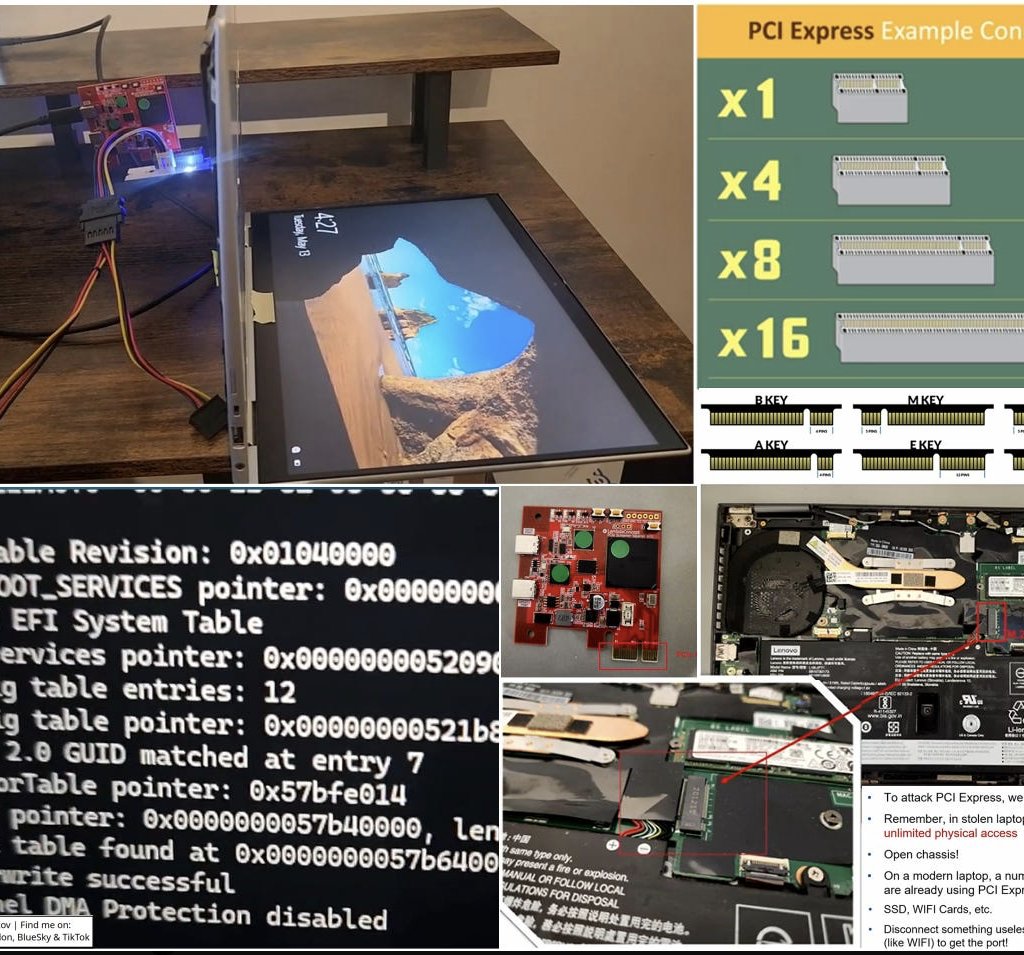
Hacking a stolen laptop: bypassing Windows security (BitLocker etc.) using PCI connector.
The article outlines security researcher Pierre-Nicolas Allard-Coutu’s demonstration of attacking a stolen Windows laptop using a PCIe connector to bypass protections like BitLocker, TPM, and Kernel DMA Protection, showing how to gain SYSTEM access.