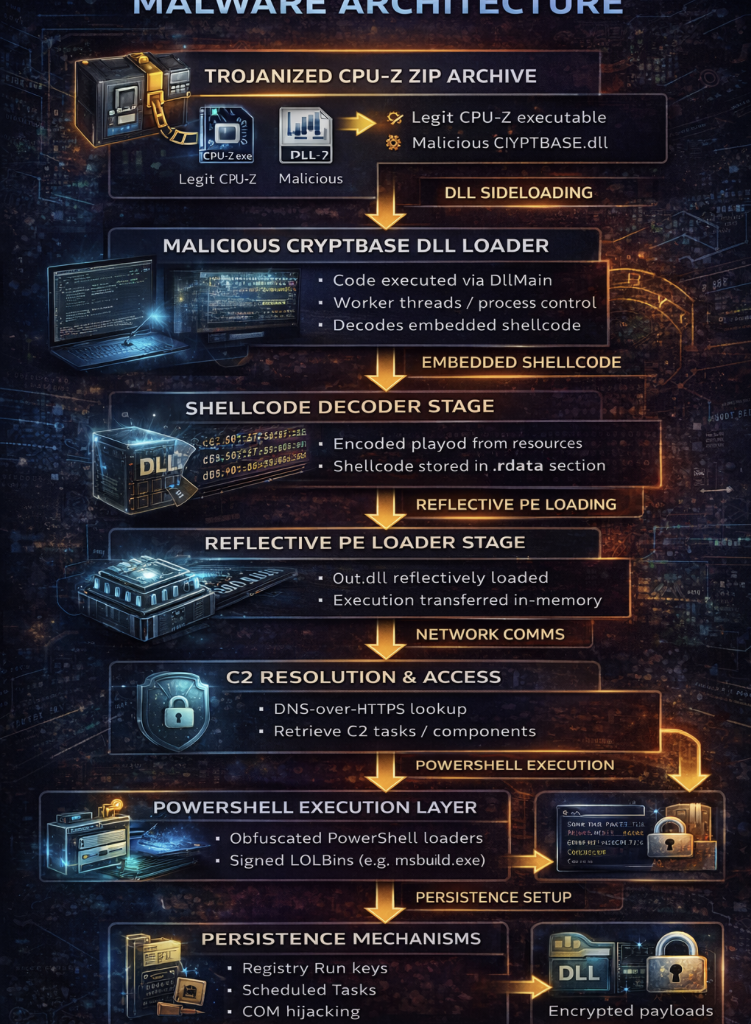
A trojanized CPU-Z package installs malware through CRYPTBASE.dll sideloading. The Zig-compiled DLL decodes an embedded payload, loads a reflective backdoor, connects to C2, and establishes persistence using PowerShell, COM hijacking, and scheduled tasks.
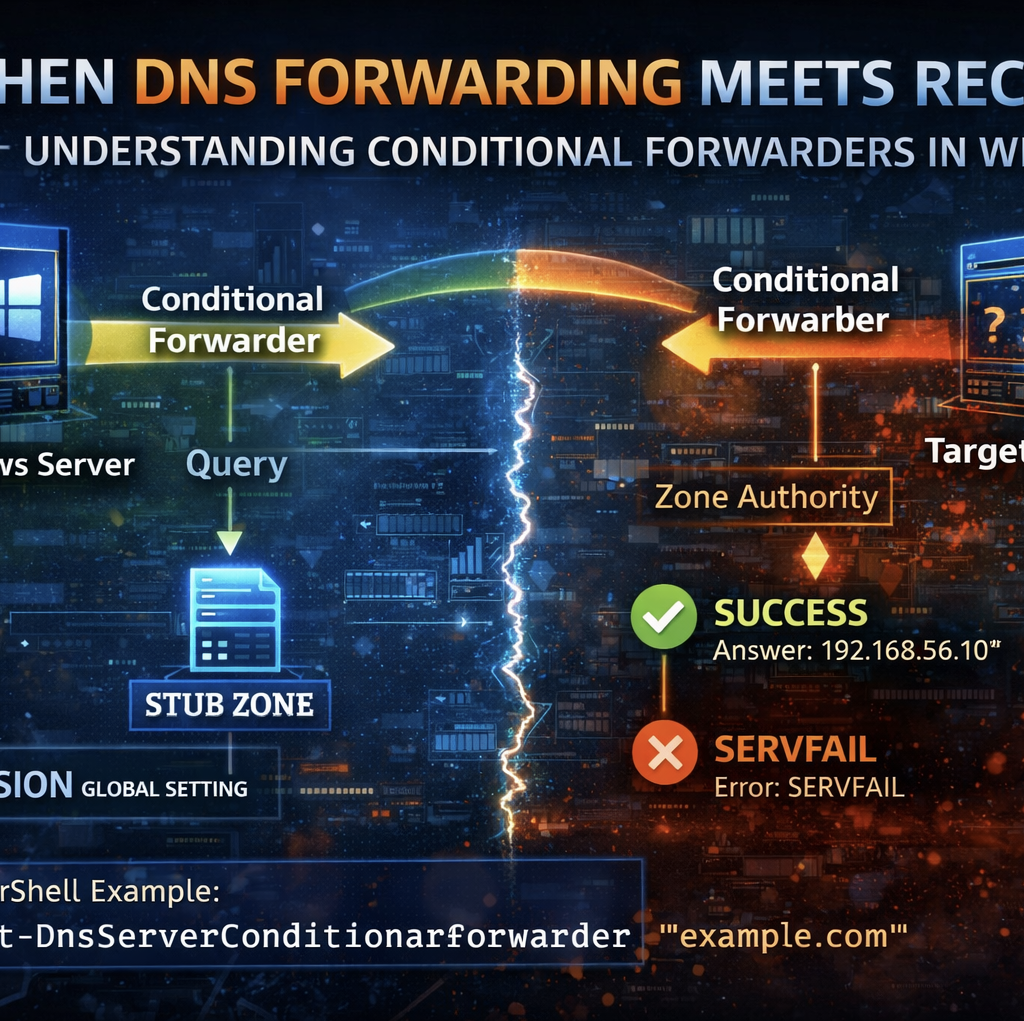
When DNS Forwarding Meets Recursion: Understanding Conditional Forwarders in Windows
The article explains how Windows DNS conditional forwarders interact with recursion. It shows that recursion settings can be overridden per zone and demonstrates how different DNS configurations affect query resolution.
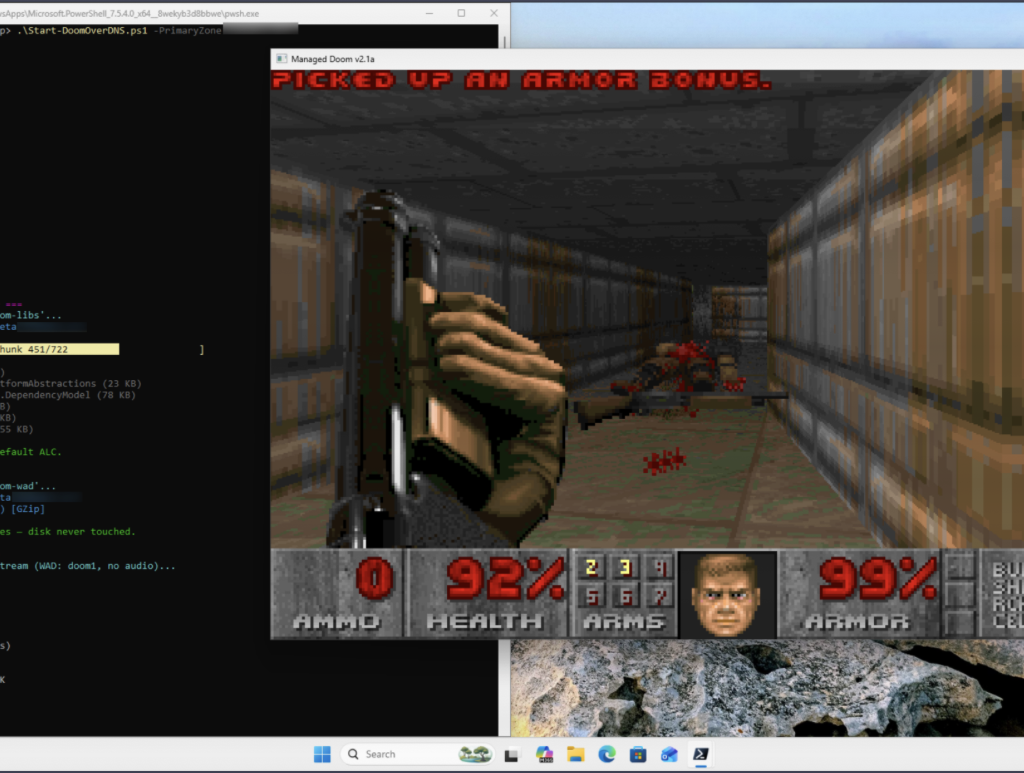
Can it Resolve DOOM? Game Engine in 2,000 DNS Records
The article shows a proof-of-concept where DOOM is stored across ~2,000 DNS TXT records and executed directly from memory. A PowerShell loader reconstructs the binary via DNS queries, illustrating how DNS can act as a covert payload delivery system.
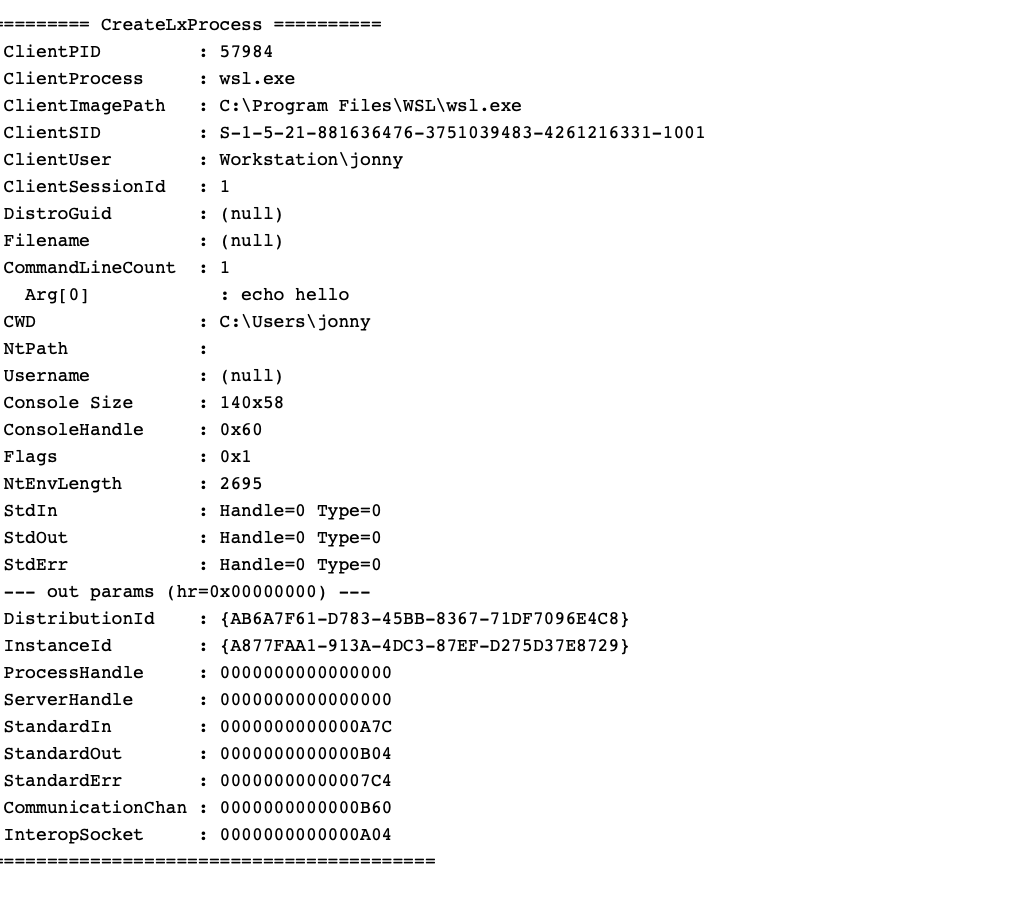
WSL, COM Hooking, & RTTI
The article demonstrates how to hook COM methods in Windows Subsystem for Linux by leveraging C++ RTTI metadata to reconstruct class layouts and locate virtual methods, enabling precise COM instrumentation without symbols.
Silent Harvest: Extracting Windows Secrets Under the Radar
“Silent Harvest” explains how attackers can quietly extract sensitive Windows secrets such as credentials and security keys by abusing legitimate registry and system mechanisms, avoiding LSASS dumping and bypassing many common EDR detections.
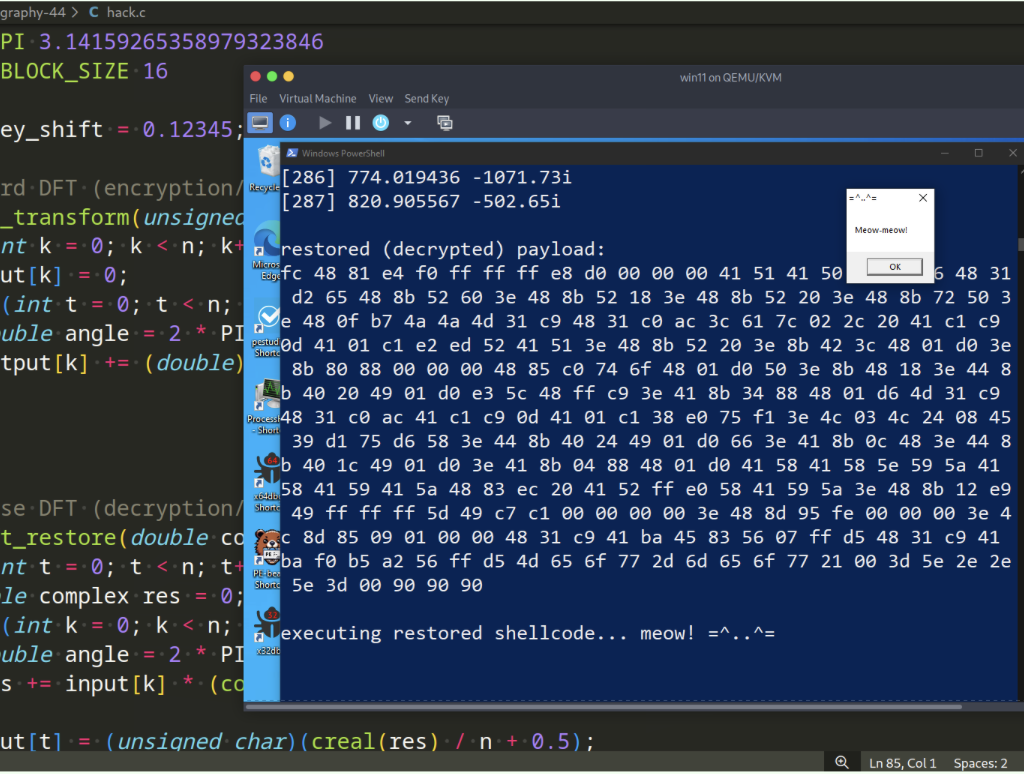
Malware and cryptography 44 – encrypt/decrypt payload via Discrete Fourier Transform. Simple C example.
Demonstration how malware can encrypt and decrypt payloads using the Discrete Fourier Transform (DFT). It provides a simple C example showing how mathematical transforms can hide shellcode and help evade static signature-based detection.
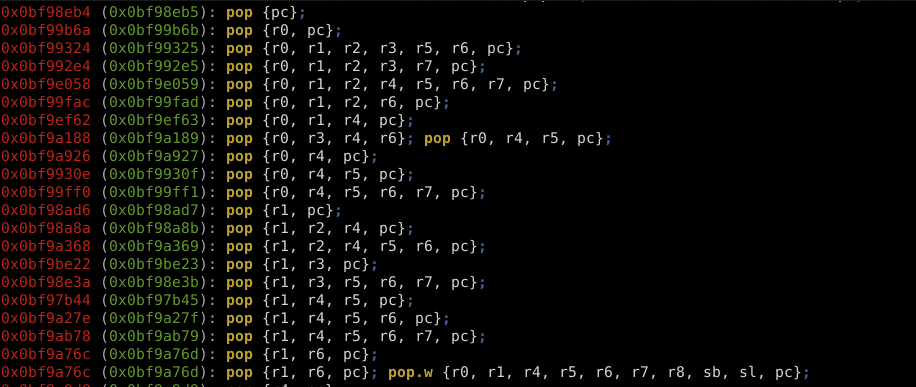
ROP the ROM: Exploiting a Stack Buffer Overflow on STM32H5 in Multiple Ways
Article details exploiting a stack buffer overflow on an STM32H5. It demonstrates basic shellcode injection, then bypassing a non-executable stack (XN/MPU) using Return-Oriented Programming (ROP) with gadgets from the chip’s ROM code to dump firmware, showcasing advanced embedded exploitation techniques.
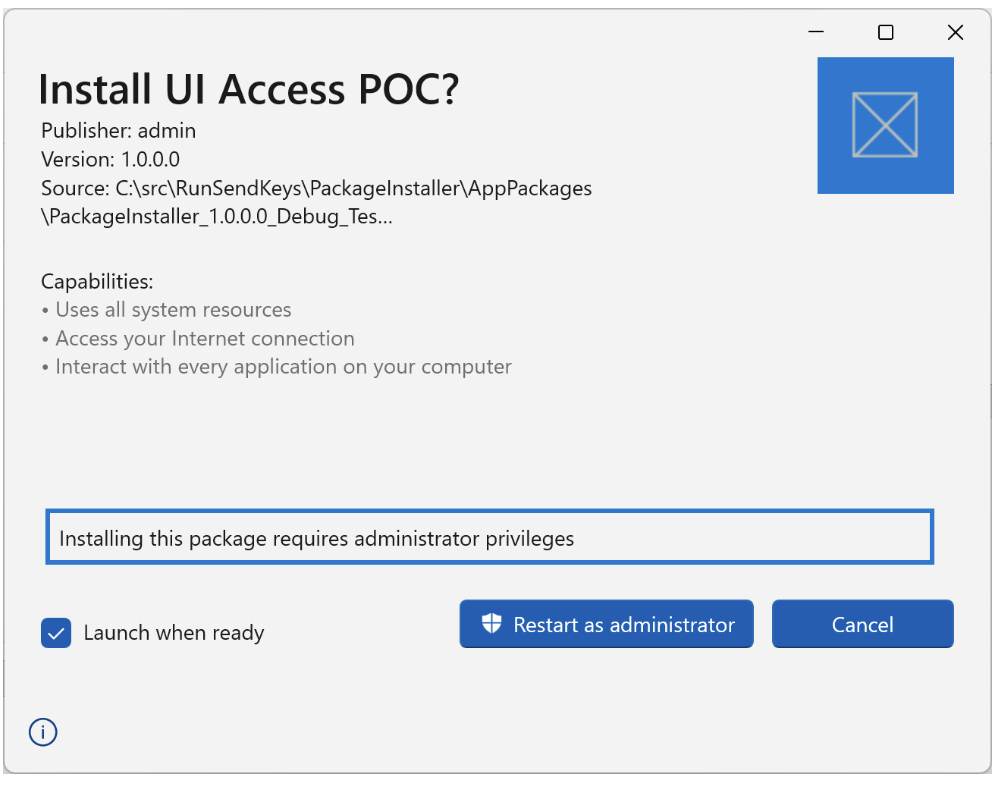
Bypassing Administrator Protection by Abusing UI Access
Windows “Administrator Protection” introduces a stronger admin model, but researchers found multiple privilege-escalation bypasses caused by legacy UAC behavior and UIAccess mechanisms. The issues allowed silent elevation in some cases and were later patched.