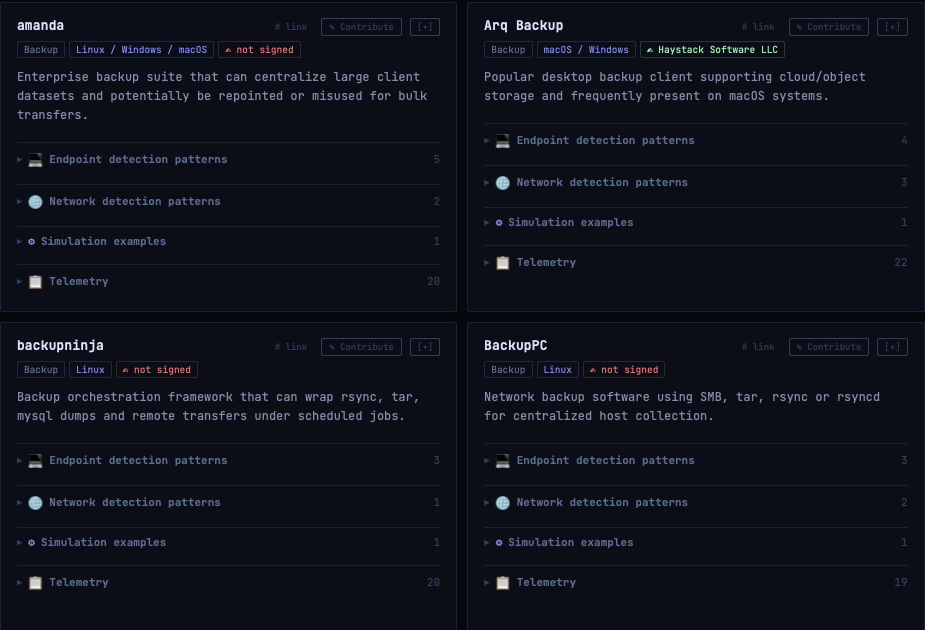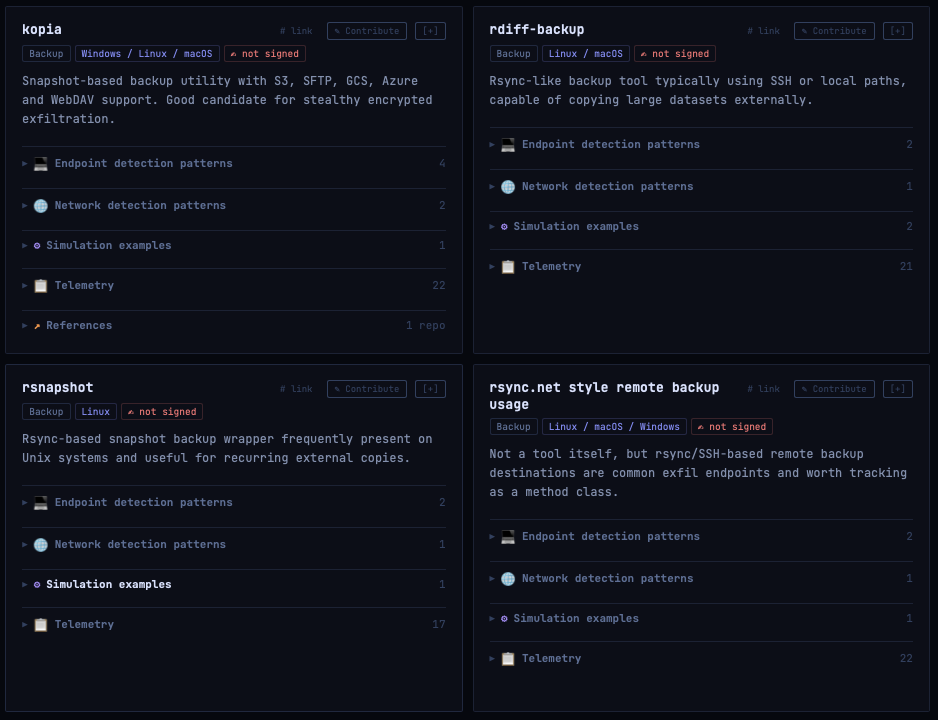
LOLExfil, a concept and toolset for performing data exfiltration using “Living-Off-the-Land” (LOL) techniques that rely on legitimate system utilities, trusted services, and built-in operating-system functionality rather than custom malware. The research explores how attackers can abuse standard tools already present in enterprise environments—such as scripting engines, networking utilities, cloud APIs, and legitimate web services—to covertly transfer sensitive data outside a monitored network.
Instead of deploying dedicated exfiltration malware, the approach leverages trusted binaries and services so that the activity blends with normal system behavior, making detection significantly harder. The project demonstrates practical scenarios where data can be encoded and transmitted through legitimate channels like HTTP requests, DNS traffic, or widely used platforms such as cloud storage services and collaboration tools.
The research highlights how traditional security monitoring often focuses on known malware or suspicious binaries, while LOL-based techniques exploit trusted tools that defenders rarely block. By combining legitimate utilities with simple encoding and automation logic, an attacker can build flexible exfiltration pipelines that bypass many security controls. The article ultimately emphasizes the importance of behavioral detection, network monitoring, and strict egress controls to mitigate these stealthy data-exfiltration techniques.