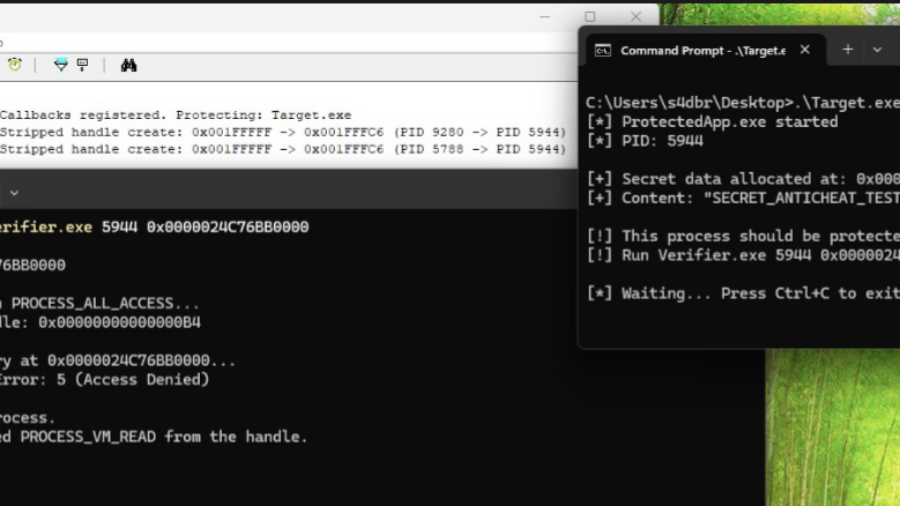
The article explains how modern kernel-level anti-cheat systems work, describing their driver architecture, callbacks, memory monitoring, and detection methods used to identify cheats that operate at the same privilege level as the operating system kernel.
Reverse engineering undocumented Windows Kernel features to work with the EDR
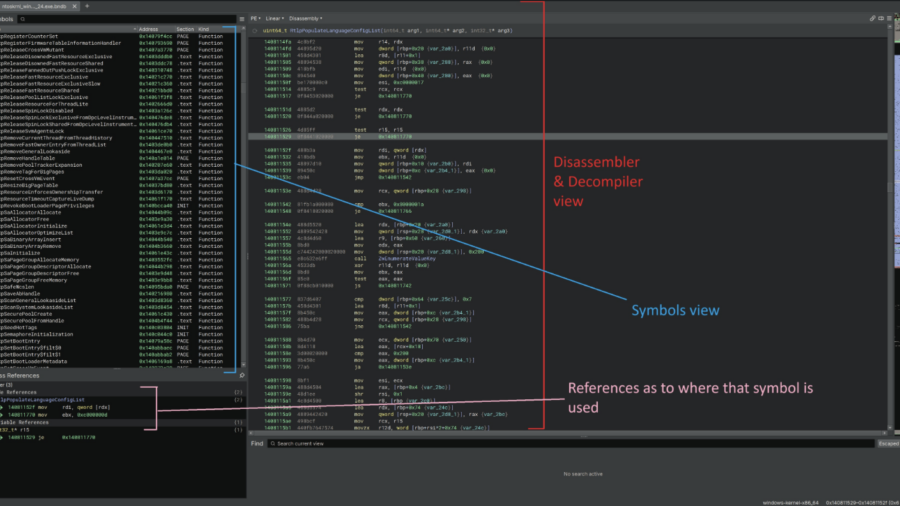
This article demonstrates how to reverse engineer the Windows 11 kernel to understand undocumented internals behind memory operations and ETW Threat Intelligence events, helping security engineers improve EDR telemetry and detect remote process memory writes.
Exploiting a Kernel Read/Write Primitive using BYOVD
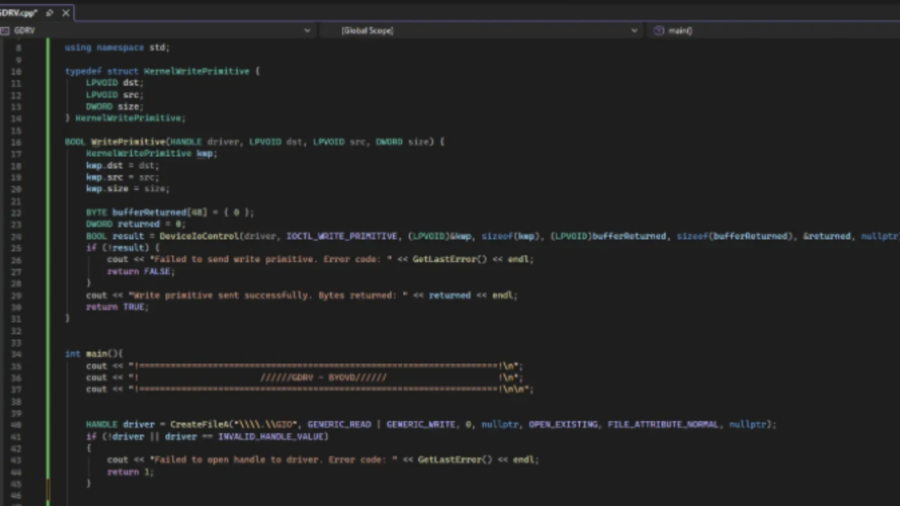
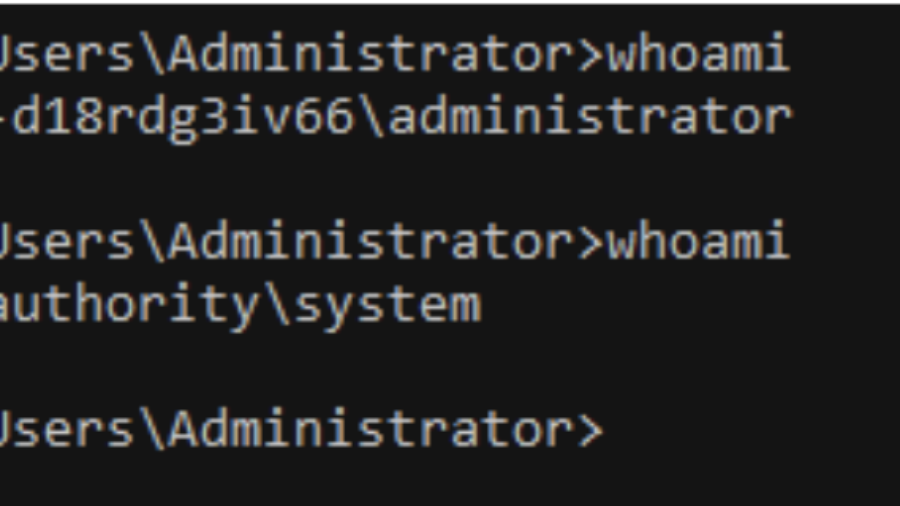
The article explains how attackers exploit a vulnerable signed driver (BYOVD) to obtain a kernel read/write primitive. It shows how unsafe IOCTL handlers allow manipulating kernel memory and abusing driver functionality for offensive operations.
Windows Kernel Debugging
The article explains how to set up Windows kernel debugging over a network using WinDBG and a host/target configuration. It covers enabling debug mode, connecting WinDBG to a remote VM, and using kernel debug infrastructure for low-level inspection and manipulation.
ALPC Uncovered: The Hidden Backbone of Local RPC in Windows 11 and Server 2025
This article explores ALPC in Windows 11 and Windows Server 2025, covering hardened server design, message attributes, section-based transfer, and its role in Local RPC. It also analyzes ALPC as a security boundary and attack surface.
PPLControlShells — Protected Process / PPL Control shells Tool
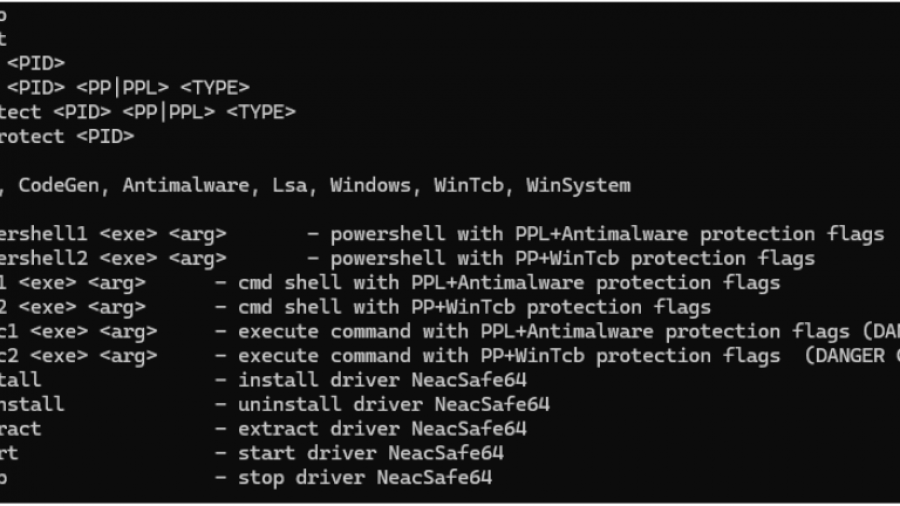
PPLControlShells (the ppexec console tool) is a native Windows PP/PPL experimentation and control utility (x64)designed to help researchers understand, test, and demonstrate how Protected Process (PP) and Protected Process Light (PPL) behave on modern Windows (10/11 + compatible Server builds).
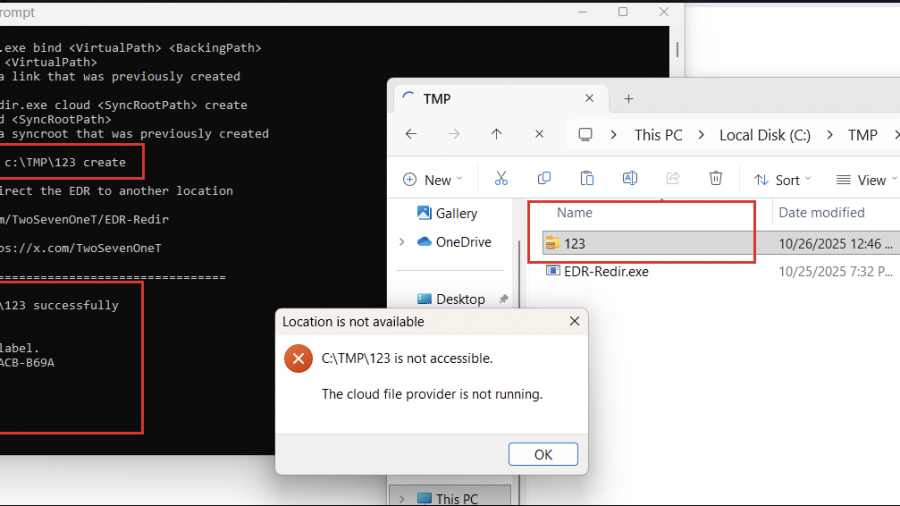
Using EDR-Redir To Break EDR Via Bind Link and Cloud Filter
the technique of exploiting the Bind Filter driver (bindflt.sys) to redirect folders containing the executable files of EDRs to a location that I completely control.
Bypassing Image Load Kernel Callbacks
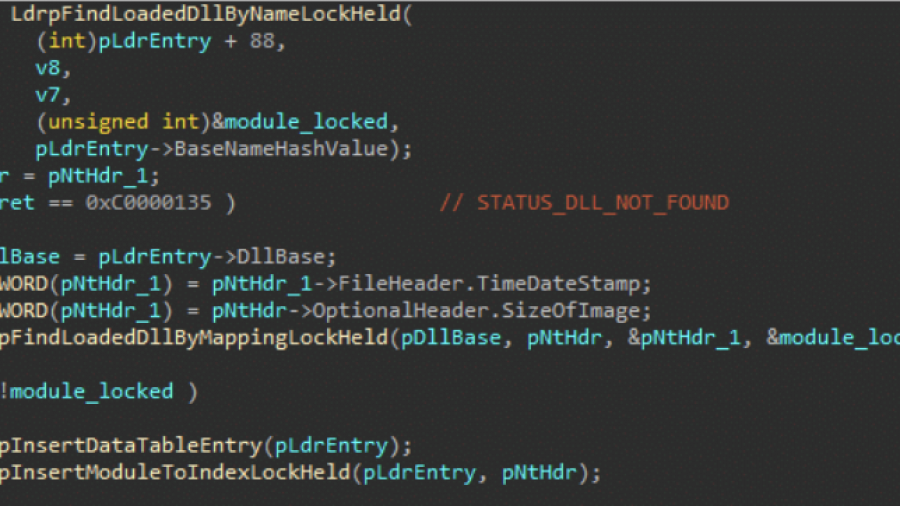
The post explores how Windows security products use kernel image load notifications to monitor when executables and DLLs are loaded by the system. These callbacks are typically registered via kernel drivers and provide telemetry that defenders use to detect malicious activity. The article analyzes how the standard Windows loader triggers these callbacks deep within NtMapViewOfSection and explains why simply avoiding the kernel event is difficult with limited privileges.