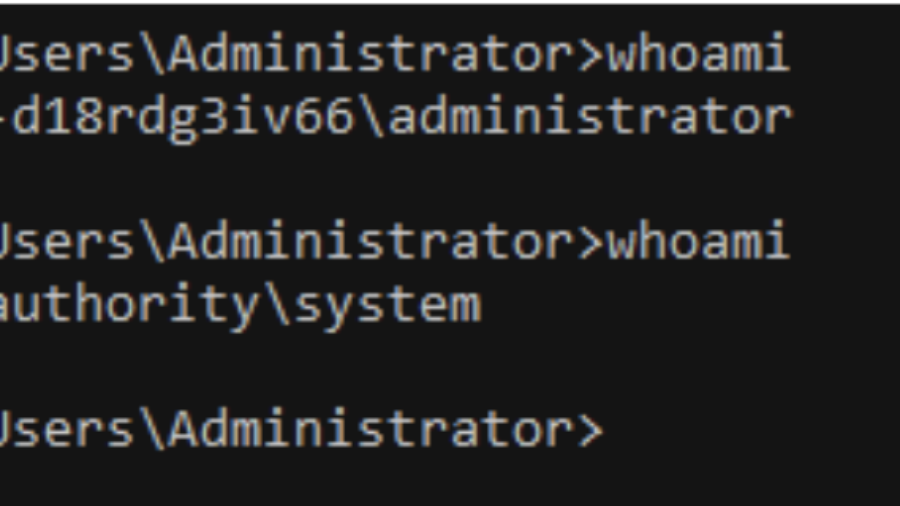
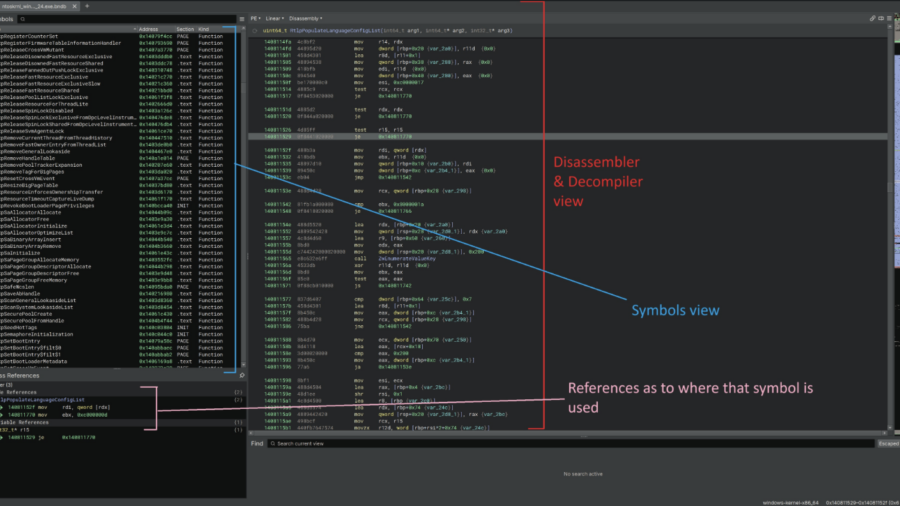
This article demonstrates how to reverse engineer the Windows 11 kernel to understand undocumented internals behind memory operations and ETW Threat Intelligence events, helping security engineers improve EDR telemetry and detect remote process memory writes.
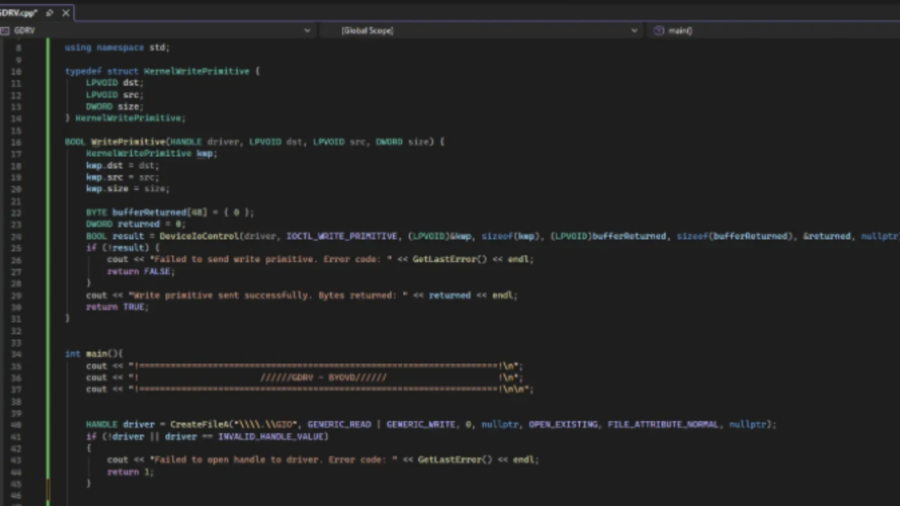
Exploiting a Kernel Read/Write Primitive using BYOVD
The article explains how attackers exploit a vulnerable signed driver (BYOVD) to obtain a kernel read/write primitive. It shows how unsafe IOCTL handlers allow manipulating kernel memory and abusing driver functionality for offensive operations.
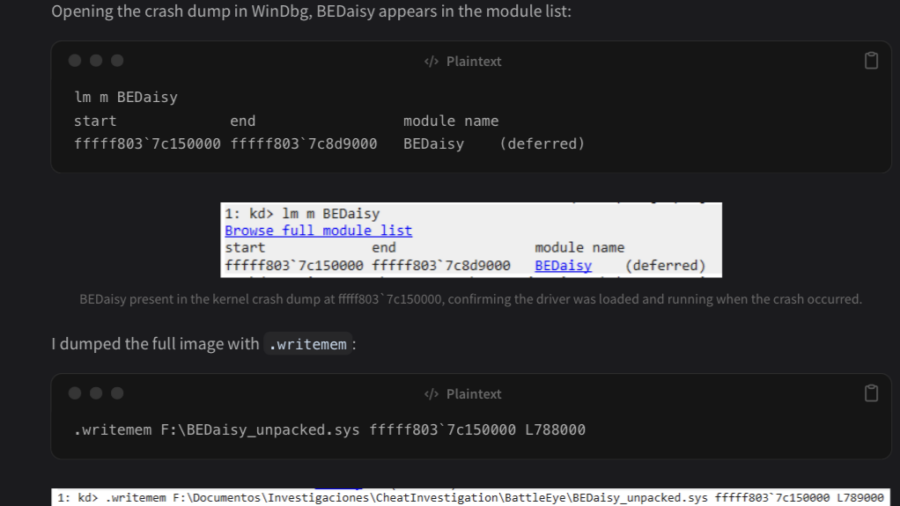
Reversing BEDaisy.sys: Static Analysis of BattlEye’s Kernel Anti-Cheat Driver
The article analyzes the Windows kernel driver BEDaisy.sys, used by BattlEye anti-cheat. Through static reverse engineering, it explores driver architecture, APC usage, hardware fingerprinting, import handling, and detection mechanisms used to monitor system activity.
Defeating Windows DEP Using ROP Chains Leveraging VirtualAlloc
Uses manual Return-Oriented Programming (ROP) to chain existing code fragments and call VirtualAlloc, changing memory permissions to bypass Windows DEP and then execute shellcode in exploited process memory.
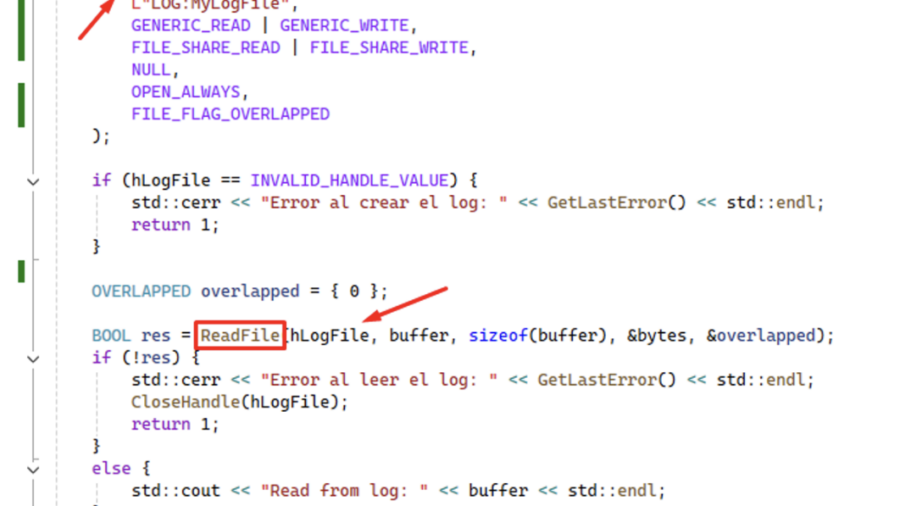
Using ReadFile with Handle of Opened .blf Log File Produces an Unrecoverable State in CLFS.sys Causing a BSoD
CVE-2026-2636 Logic bug in Windows’ CLFS driver: calling ReadFile on a .blf log handle pushes CLFS.sys into an unrecoverable state and triggers an immediate BSoD — local DoS with only user privileges.
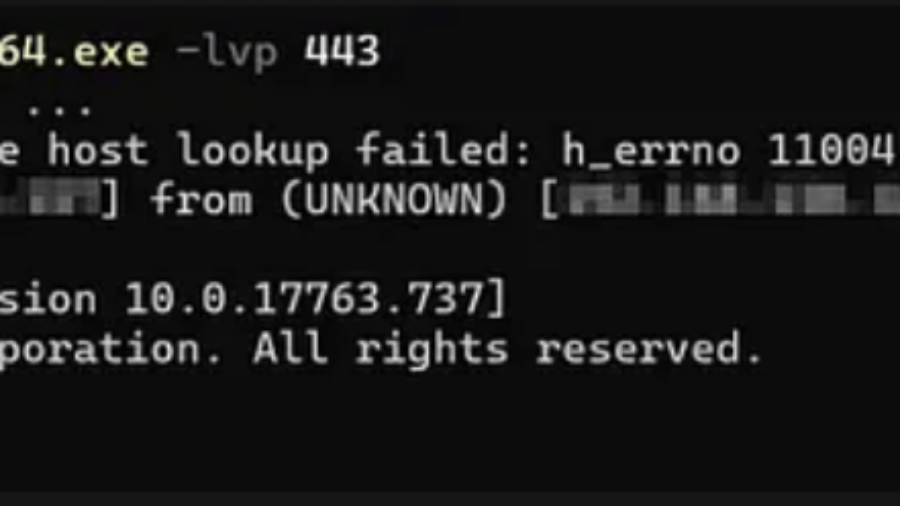
Windows Kernel Debugging
The article explains how to set up Windows kernel debugging over a network using WinDBG and a host/target configuration. It covers enabling debug mode, connecting WinDBG to a remote VM, and using kernel debug infrastructure for low-level inspection and manipulation.