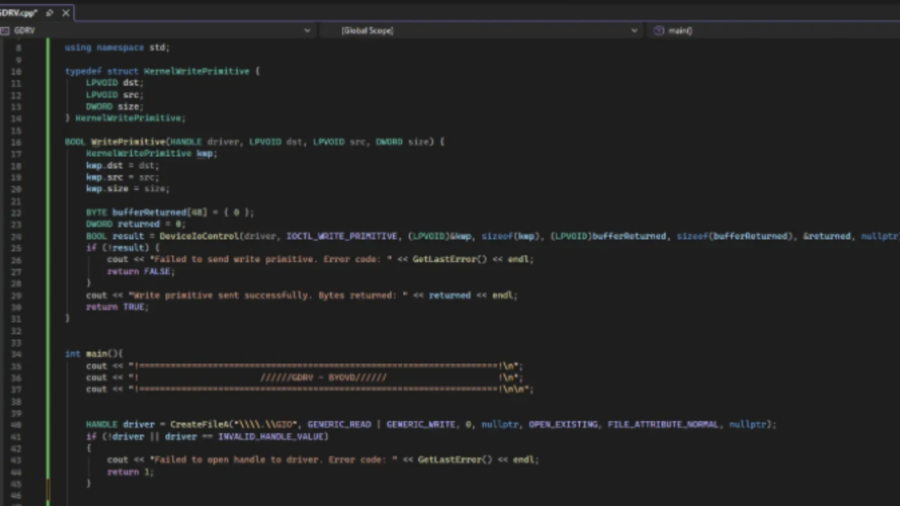
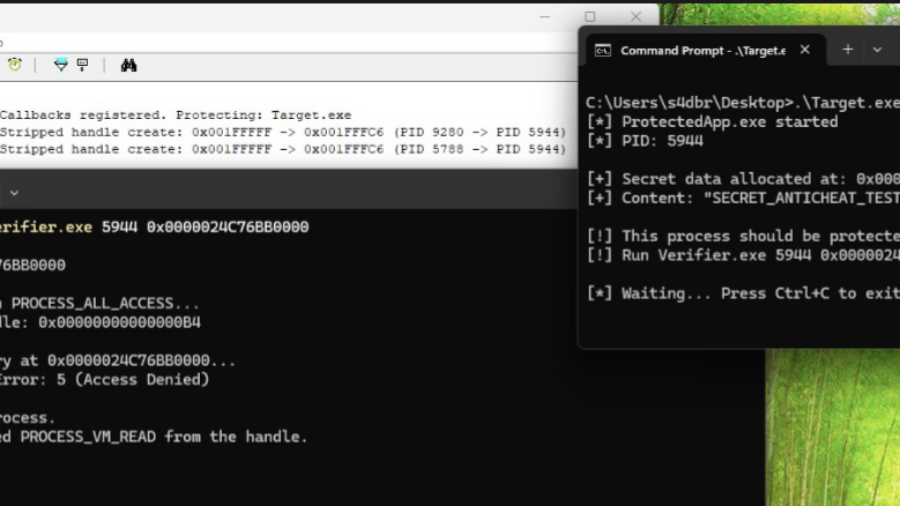
The article explains how modern kernel-level anti-cheat systems work, describing their driver architecture, callbacks, memory monitoring, and detection methods used to identify cheats that operate at the same privilege level as the operating system kernel.
Exploiting a Kernel Read/Write Primitive using BYOVD
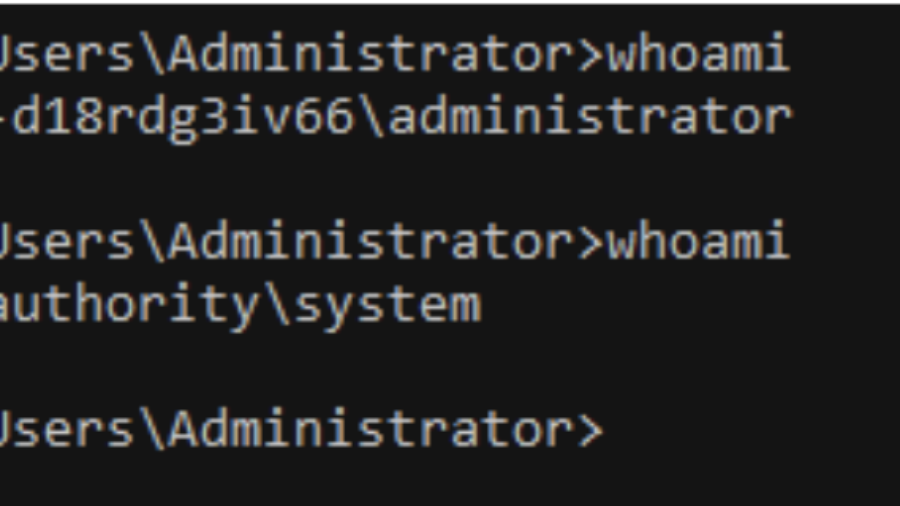
The article explains how attackers exploit a vulnerable signed driver (BYOVD) to obtain a kernel read/write primitive. It shows how unsafe IOCTL handlers allow manipulating kernel memory and abusing driver functionality for offensive operations.
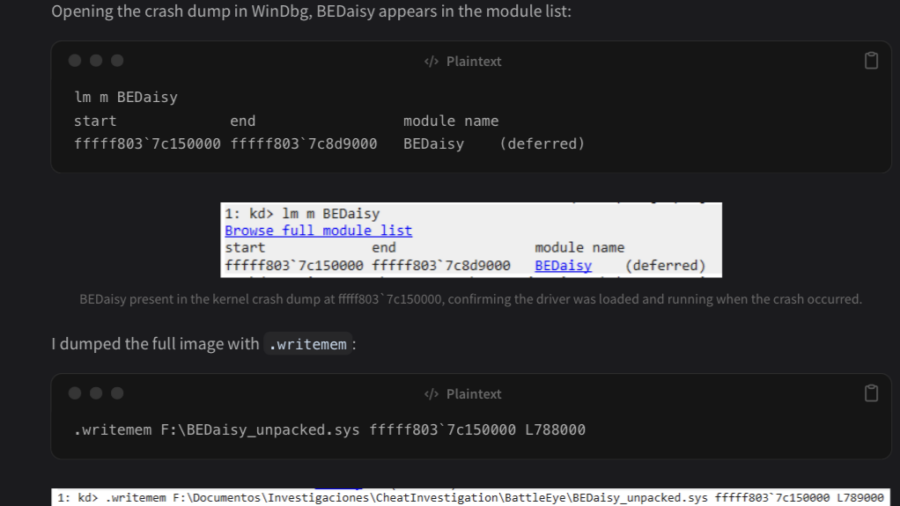
Reversing BEDaisy.sys: Static Analysis of BattlEye’s Kernel Anti-Cheat Driver
The article analyzes the Windows kernel driver BEDaisy.sys, used by BattlEye anti-cheat. Through static reverse engineering, it explores driver architecture, APC usage, hardware fingerprinting, import handling, and detection mechanisms used to monitor system activity.
Windows Kernel Debugging
The article explains how to set up Windows kernel debugging over a network using WinDBG and a host/target configuration. It covers enabling debug mode, connecting WinDBG to a remote VM, and using kernel debug infrastructure for low-level inspection and manipulation.